
Heavy Breathing At Rest: Clinical Triage For Your Dog

AI-powered clinical support helps you assess respiratory distress severity, guiding your next steps with evidence-based insights while keeping your veterinarian at the center of care.

VETERINARY AI FOR PET OWNERS

Understanding Why Your Dog Is Breathing Heavily While Resting

Resting respiratory rates exceeding 30 breaths per minute in dogs often indicate underlying physiological stress. This may signal pain, anxiety, fever, or early-stage cardiopulmonary compromise requiring objective evaluation.

While not every instance constitutes an emergency, resting tachypnea demands attention. Veterinary AI provides structured triage to help you distinguish between behavioral responses and clinical red flags warranting immediate care.

Veterinary AI

Get personalized guidance for your pet's symptoms

When Can Veterinary AI Help You and Your Dog?

Clinical triage support tailored to your dog’s respiratory status.

Unsure About Severity?

When your dog is breathing heavy at rest and you're unsure of the severity, Veterinary AI provides evidence-based triage to distinguish behavioral responses from conditions requiring urgent care.

AI evaluates resting respiratory rate, effort pattern, and accompanying signs
Provides objective severity scoring (mild–moderate–emergency)
Guides your next steps with clinical confidence

Persistent or Worsening?

If heavy breathing at rest persists beyond 30 minutes or your dog shows coughing, pale gums, or lethargy, Veterinary AI helps you compile a severity timeline and structured clinical summary for your vet.

Tracks progression with time-stamped symptom logging
Identifies patterns suggesting cardiopulmonary involvement
Generates clinical report highlighting persistence and severity

Pre-Visit Preparation?

When you need clinically-grounded guidance to manage the next hours safely while preparing the exact respiratory history your vet needs for an informed diagnostic evaluation.

Documents resting respiratory rate over time for clinical accuracy
Creates exportable report with symptom timeline and severity scoring
Empowers informed conversation with your veterinarian

+0
Symptoms analyzed
by pet owners worldwide
+0
Pet owners trusting
AI for their pet's health
0/7
Available anytime
even at 2AM emergencies
Person monitoring dog's breathing at home

Safe Home Care & Monitoring Guidelines

Clinically safe, non-invasive steps you can take immediately to assess your dog's respiratory status, provide comfort, and gather the exact information your veterinarian needs.

Count resting respiratory rate for 60 seconds while your dog is asleep or calm; record the number and time of day
Check gum color and capillary refill time—pale, blue, or gray gums indicate inadequate oxygenation and require immediate veterinary attention
Maintain ambient temperature between 68-72°F (20-22°C) to reduce thermal stress and minimize respiratory effort
Video-record 30 seconds of your dog's resting breathing pattern—this provides objective documentation of rate and effort for your veterinarian
Restrict exercise and excitement—limit activity to short, leashed bathroom breaks only to prevent exacerbating respiratory distress
Document any accompanying signs—coughing, lethargy, restlessness, or changes in appetite—with timestamps for accurate clinical history
Start Symptom Assessment

TESTIMONIALS

OPYNIO Reviews Dog Breathing Heavy At Rest

Common Causes of Heavy Breathing At Rest

Clinical etiologies range from behavioral triggers to systemic conditions.

Anxiety or Stress Response

Environmental changes or separation anxiety can elevate resting respiratory rate temporarily

🔍 What to watch: Rapid, shallow breathing that resolves when the stressor is removed. Often accompanied by pacing, panting, or whining.

✅ Typical resolution: Breathing normalizes within 15-30 minutes of stressor removal. Environmental enrichment and calming protocols support management.

Click to learn more

Environmental Overheating

Elevated ambient temperature triggers panting; ensure adequate hydration and cool shelter

🔍 What to watch: Open-mouth panting with tongue extension, often accompanied by seeking cool surfaces. Brachycephalic breeds are at higher risk.

✅ Typical resolution: Rate decreases within 10-20 minutes of cooling. Provide fresh water and move to shaded, ventilated area.

Click to learn more

Pain-Related Tachypnea

Musculoskeletal or abdominal discomfort often presents with shallow, rapid breathing patterns

🔍 What to watch: Shallow breathing, reluctance to lie down, guarding posture, or vocalization when moving. Often worse with positional changes.

✅ Typical resolution: Requires pain management under veterinary supervision. Do not administer human analgesics — many are toxic to dogs.

Click to learn more

Early-Stage Heart Disease

Compensatory mechanisms increase resting respiratory rate as cardiac output declines

🔍 What to watch: Gradual increase in resting rate, especially at night. May be accompanied by cough, exercise intolerance, or restless sleep.

✅ Typical resolution: Requires echocardiogram and cardiac evaluation. Early detection improves long-term management outcomes.

Click to learn more

Respiratory Tract Infection

Infectious or inflammatory airway disease causes increased effort even during rest

🔍 What to watch: Honking cough, nasal discharge, or audible wheezing. May be accompanied by fever, lethargy, or decreased appetite.

✅ Typical resolution: Kennel cough cases often self-resolve in 7-10 days. Bacterial pneumonia requires targeted antibiotics based on culture.

Click to learn more

Age-Related Degenerative Changes

Senior dogs experience reduced pulmonary compliance and increased resting respiratory rates

🔍 What to watch: Gradual increase in resting rate over months or years. May be subtle and only apparent when other conditions arise.

✅ Typical resolution: While not reversible, early identification allows for proactive management of underlying age-related conditions.

Click to learn more

If your dog is breathing heavy at rest and you’re uncertain about the severity, take informed action. Veterinary AI delivers real-time clinical triage tailored to your pet’s specific presentation—helping you distinguish between behavioral responses and signs requiring urgent care with clarity and confidence.
When to Seek Immediate Emergency Care

Red flags that require urgent veterinary attention — and how Veterinary AI supports each critical decision.

Blue-tinged or pale gums — Veterinary AI's Instant Symptom Analysis flags cyanosis or pallor as high-risk indicators of inadequate oxygenation and prompts immediate emergency contact
Resting respiratory rate exceeding 40 breaths per minute — Risk Scoring assigns elevated urgency to severe tachypnea; the algorithm recommends calling your nearest emergency facility immediately
Collapse or inability to stand — 24/7 Smart Triage identifies neurological or circulatory compromise and escalates urgency classification to emergency response
Stridor or audible wheezing with open-mouth breathing — Triage system detects upper airway obstruction patterns and advises immediate transport to the nearest veterinary hospital
Profuse drooling with labored breathing — Urgency Level Assessment correlates with heatstroke risk or upper airway obstruction and recommends cooling protocols en route to emergency care
No improvement after 30 minutes of rest in a cool environment — The platform generates an Exportable Clinical Summary Report documenting progression, breathing rate history, and response to home care for seamless emergency handoff
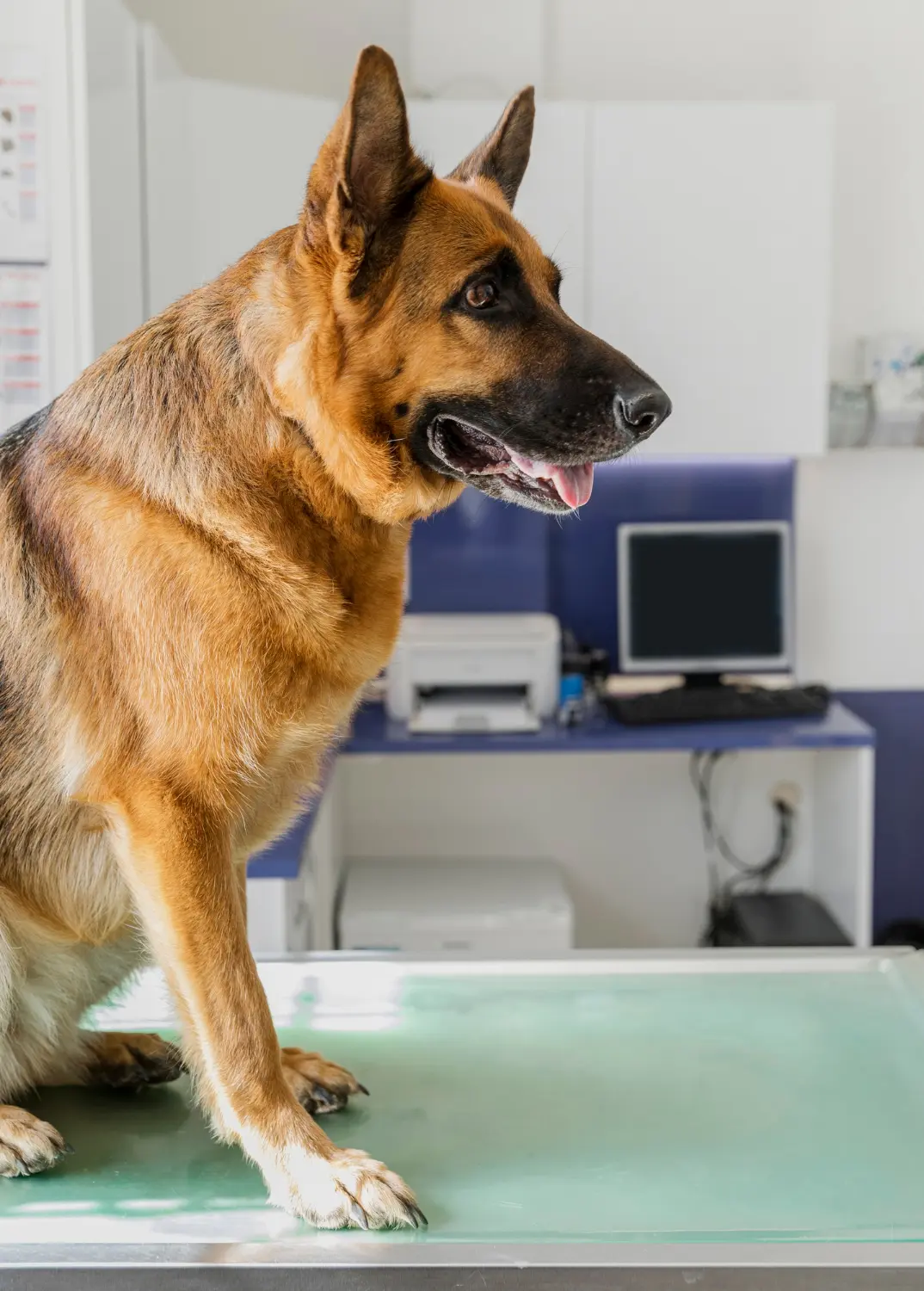
Dog showing signs of respiratory distress needing emergency veterinary care

Monthly

Flexible, cancel anytime

€9.99 /month
AI symptom assessment
Emergency guidance 24/7
Preventive care reminders
Wellness monitoring
Breed-specific health tips
Unlimited conversations
Start monthly plan
SAVE 24%

Annual

Best value for your pet

€90.99 /year

Just €7.58/month

AI symptom assessment
Emergency guidance 24/7
Preventive care reminders
Wellness monitoring
Breed-specific health tips
Unlimited conversations
Priority support
Start annual plan

Veterinary AI provides clinical triage support and educational information based on veterinary data models. This platform does not deliver definitive diagnoses, treatment plans, or replace professional in-person veterinary care. Always consult a licensed veterinarian for medical decisions regarding your pet’s health. In emergencies, contact your nearest veterinary hospital immediately.

By submitting you agree to our Privacy Policy

Veterinary AI

AI-Powered Pet Care 24/7

More and more pet owners trust Veterinary AI for their pet's health. Get instant AI consultations, track medical records, set vaccine reminders, and access expert guidance — all from your phone. No waiting rooms, no appointments. Start now.

FAQ

Frequently Asked
Questions

Everything you need to know about heavy breathing at rest in dogs and how Veterinary AI can help. Can't find what you're looking for?

Start Symptom Assessment

Why is my dog breathing heavy while resting?

Resting tachypnea may indicate pain, fever, heart disease, respiratory infection, or environmental stress. Clinical evaluation is advised.

How many breaths per minute is too fast for a resting dog?

A resting rate exceeding 30 breaths per minute warrants monitoring; over 40 breaths/minute constitutes an emergency threshold.

What should I do if my dog is panting heavily at night?

Ensure cool, quiet conditions. If panting persists without recent exercise, record rate and contact your vet for guidance.

Does heavy breathing always mean heart failure in dogs?

Not always, but it is a key clinical sign. Underlying causes range from anxiety to cardiopulmonary disease requiring objective assessment.

Can I give my dog any medication for heavy breathing at home?

Never administer human or veterinary medications without professional direction. Improper use may worsen respiratory function.