Dachshund Back Problems: Clinical Triage Support

AI-powered clinical assessment helps you evaluate your Dachshund’s back concerns objectively, providing structured guidance while you prepare for your veterinary consultation.

VETERINARY AI FOR PET OWNERS

Understanding Your Dachshund's Back Concerns

Dachshunds are genetically predisposed to intervertebral disc disease (IVDD) due to their chondrodystrophic (dwarf) conformation, which accelerates disc degeneration. Back problems are among the most urgent health threats in this breed, potentially affecting mobility and quality of life.

While some back discomfort may resolve with rest, spinal issues can progress rapidly and require immediate intervention. Objective monitoring helps distinguish between minor muscle strain and neurological emergencies. Veterinary AI provides structured clinical assessment to support your observations and facilitate productive veterinary consultations.

Veterinary AI

Assess your Dachshund's back concerns with clinical precision

Common Causes of Dachshund Back Problems

Understanding these potential causes helps you identify back concerns early and seek appropriate veterinary care.

Muscle Strain

Minor muscle spasm after activity; temporary stiffness improves with rest and careful observation

Jumping and Trauma

Acute disc injury from jumping off furniture or beds; common in Dachshunds due to long spine

IVDD (Intervertebral Disc Disease)

Genetic disc degeneration causing herniation; leading cause of back problems in Dachshunds requiring urgent care

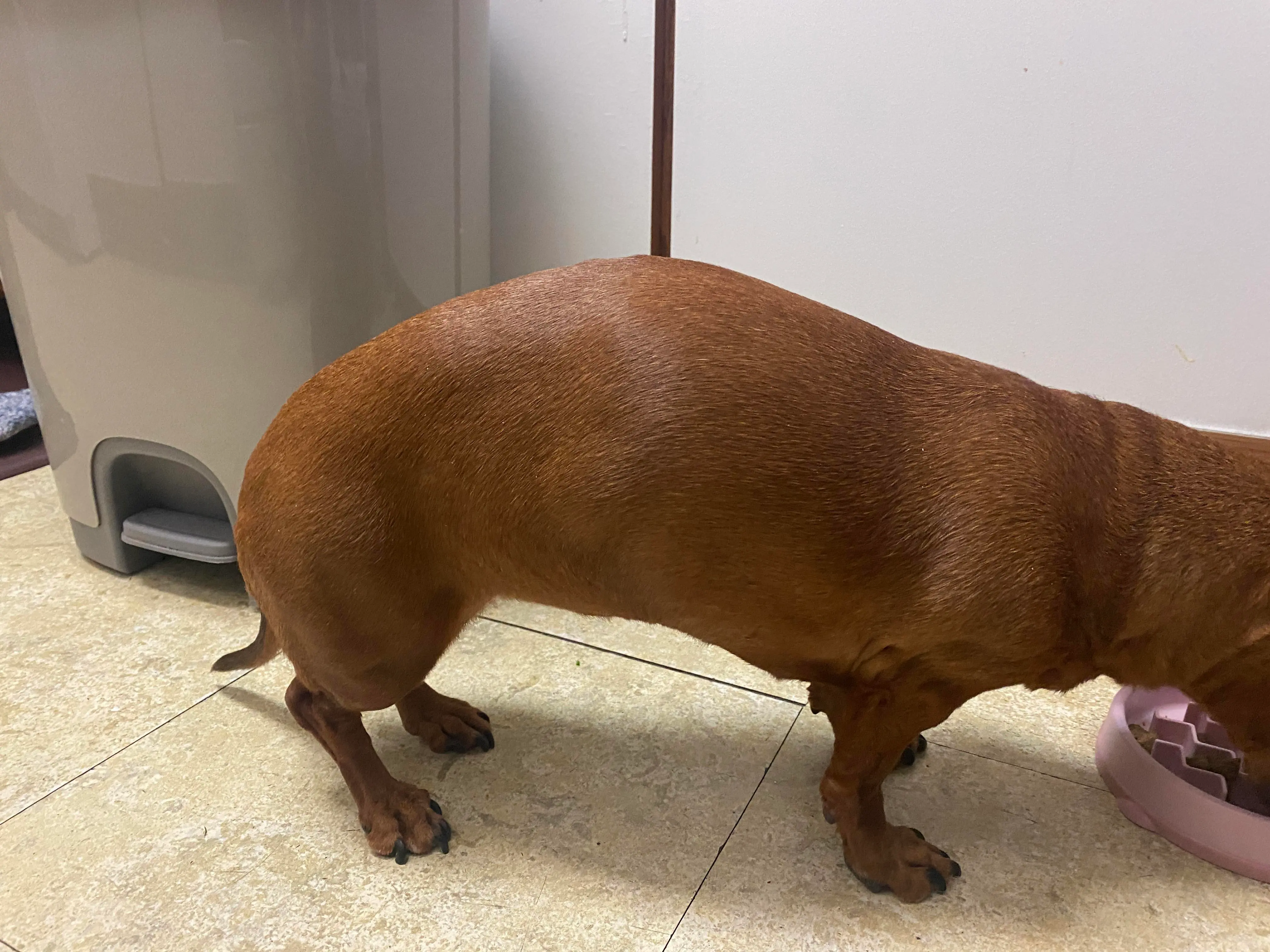
Dachshund back problems: clinical assessment and triage support

Excess Body Weight

Obesity stresses the long spine; even moderate weight reduction significantly reduces disc pressure

Degenerative Changes

Age-related disc calcification and spinal changes; progressive conditions require ongoing management

Spinal Infections or Tumors

Rare but serious; signs include persistent pain and neurological changes requiring immediate evaluation

If your Dachshund shows back pain, wobbliness, or changes in mobility, early detection is critical. Veterinary AI provides real-time clinical triage tailored to breed-specific risks; helping you distinguish between minor discomfort and IVDD emergencies requiring prompt veterinary evaluation with clarity and confidence.

+0
Symptoms analyzed
by pet owners worldwide
+0
Pet owners trusting
AI for their pet's health
0/7
Available anytime
even at 2AM emergencies

Safe Home Care & Monitoring Guidelines

Non-invasive, medically safe measures to support your Dachshund and monitor for early back-related changes

Mobility and Pain Assessment

Observe gait, wobbliness, and posture; note any vocalization, trembling, or reluctance to move

Crate Rest and Activity Restriction

Restrict ALL jumping, stairs, and vigorous activity; use a crate for strict confinement during acute episodes

Weight Management

Maintain lean body condition; excess weight significantly increases disc pressure and risk of IVDD

Proper Lifting and Handling

Support both chest and hindquarters when lifting; avoid pulling by legs or twisting the spine

Environmental Modifications

Use ramps instead of stairs; block access to furniture; provide orthopedic bedding for spinal support

Emergency Preparedness

Know nearest emergency vet location; prepare transport with rigid board for safe spinal immobilization

These are supportive measures only. They do not replace professional veterinary assessment or treatment. Always consult your veterinarian for definitive guidance.

TESTIMONIALS

OPYNIO Reviews Dachshund Back Problems

When Can Veterinary AI Help You and Your Dog?

Timely, clinically-grounded support for every stage of your Dachshund's back assessment

Unsure About Severity?

When your Dachshund shows back concerns and you cannot determine whether they are minor strain or potential IVDD requiring immediate veterinary attention.

Persistent or Escalating?

If your Dachshund shows worsening pain, wobbliness, or loss of function; these may indicate progressive IVDD requiring emergency care.

Pre-Visit Preparation?

When you need clinically-grounded guidance while preparing the exact history (symptoms, progression, and all clinical observations) your veterinarian needs for informed evaluation.

💡 Always trust your instincts. If you're concerned about your Dachshund's back, Veterinary AI provides immediate, evidence-based assessment; but never delays seeking emergency care when your dog shows paralysis, loss of bladder control, or inability to walk.

When to Seek Immediate Emergency Care

These warning signs require urgent action, supported by Veterinary AI's core tools.

Emergency signs of severe back issues in Dachshunds requiring immediate veterinary care
⚠️ Instant Symptom Analysis & Risk Scoring

Inability to walk or paralysis of hindlimbs is flagged as a critical emergency; this indicates severe spinal cord compression requiring immediate surgical evaluation.

🩸 Instant Symptom Analysis & Risk Scoring

Loss of bladder or bowel control triggers high-risk scoring; this indicates severe neurological deficit requiring emergency intervention.

🔄 24/7 Smart Triage & Urgency Assessment

Sudden collapse or inability to rise elevates urgency to critical; this indicates acute disc herniation requiring emergency care at any hour.

🫨 24/7 Smart Triage & Urgency Assessment

Signs of neurologic deterioration including ataxia, knuckling, or proprioceptive deficits are assessed as urgent; these indicate spinal cord compromise.

📄 Exportable Clinical Summary Report

History of trauma, fall, or jumping is documented for rapid handover; this history is critical for emergency neurological evaluation.

📋 Exportable Clinical Summary Report

Any acute pain, wobbliness, or paralysis history is compiled into a vet-ready report; this facilitates rapid emergency handover and neurosurgical evaluation.

Any of these signs? Do not wait.

Veterinary AI prepares a clinical summary for your veterinarian while you travel, but immediate emergency veterinary attention is essential for severe Dachshund back concerns.

Start Symptom Assessment

Monthly

Flexible, cancel anytime

€9.99 /month
AI symptom assessment
Emergency guidance 24/7
Preventive care reminders
Wellness monitoring
Breed-specific health tips
Unlimited conversations
Start monthly plan
SAVE 24%

Annual

Best value for your pet

€90.99 /year

Just €7.58/month

AI symptom assessment
Emergency guidance 24/7
Preventive care reminders
Wellness monitoring
Breed-specific health tips
Priority support
Start annual plan
Veterinary AI provides clinical triage support and educational information; it does not constitute a diagnosis, treatment plan, or substitute for professional, in-person veterinary care.

By submitting you agree to our Privacy Policy

Veterinary AI

AI-Powered Pet Care 24/7

More and more pet owners trust Veterinary AI for their pet's health. Get instant AI consultations, track medical records, set vaccine reminders, and access expert guidance — all from your phone. No waiting rooms, no appointments. Start now.

FAQ

Frequently Asked
Questions

Everything you need to know about Dachshund back problems and how Veterinary AI can help. Can't find what you're looking for?

Start Symptom Assessment

What are the early signs of back problems in Dachshunds?

Look for hunched posture, reluctance to jump, trembling, vocalization when touched, or unsteady gait. Any of these require immediate attention.

What is IVDD and why are Dachshunds prone to it?

IVDD is intervertebral disc disease causing disc herniation. Dachshunds' long spines and chondrodystrophic conformation make them highly predisposed.

Can I prevent back problems in my Dachshund?

Prevent jumping, use ramps for furniture, maintain lean weight, support spine when lifting, and restrict high-impact activity.

What treatments are available for Dachshund back problems?

Treatment ranges from strict crate rest to surgery depending on severity. Veterinary neurologists determine appropriate management.

When is Dachshund back pain a medical emergency?

Emergency if your dog cannot walk, loses bladder control, shows paralysis, or has sudden severe pain. Do not delay seeking care.