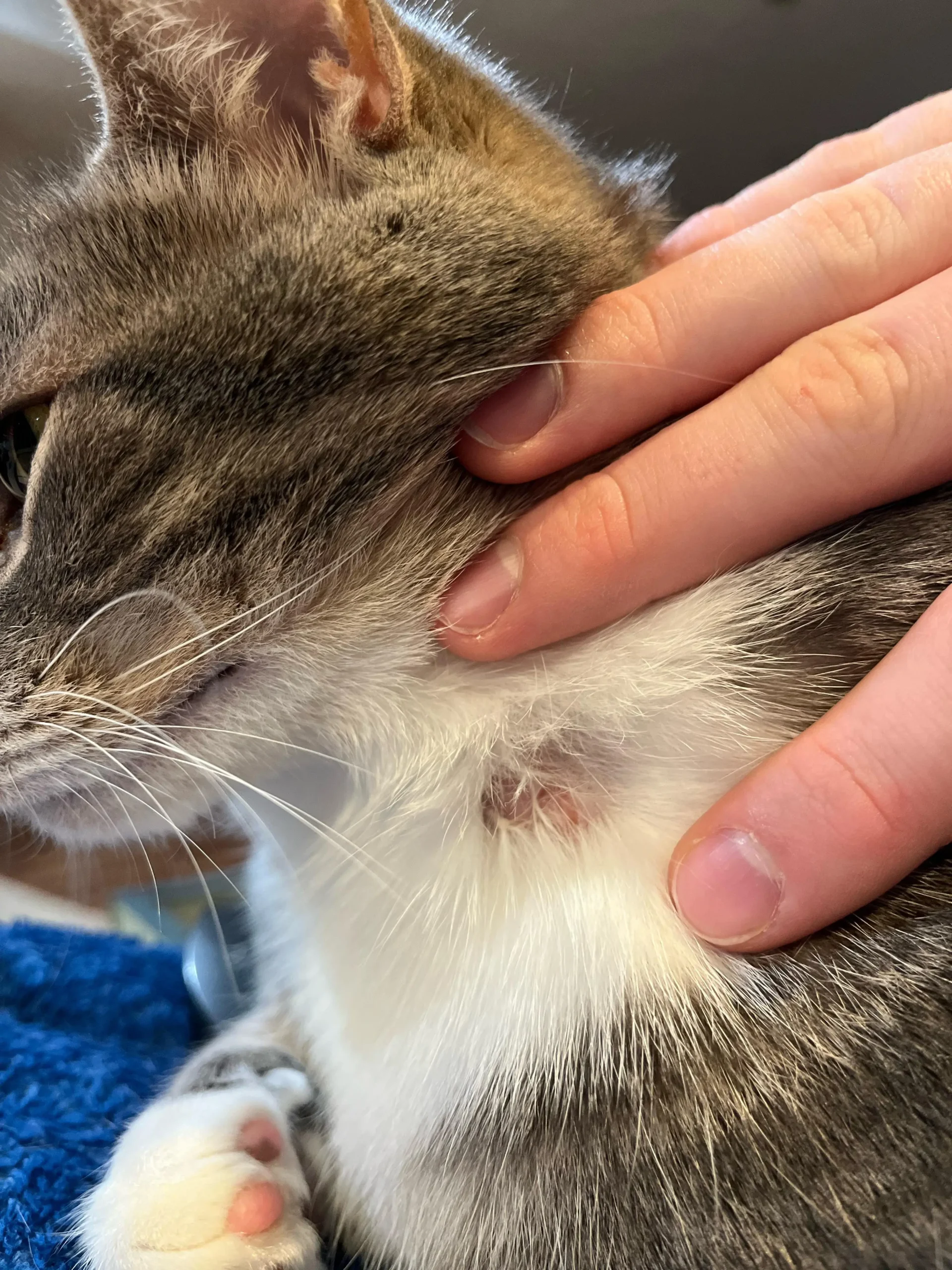
Understand your cat’s neck lump through clinically-grounded AI assessment. Get objective guidance to determine urgency and prepare for your veterinary visit.
A lump or swelling on your cat’s neck may indicate reactive lymph nodes, abscesses, benign growths, or more serious conditions like neoplasia. The location, consistency, and rate of change provide critical diagnostic clues about the underlying cause.
While many neck lumps are benign and self-limiting, others require prompt evaluation. Objective triage helps distinguish between conditions needing monitoring and those requiring urgent care. Veterinary AI provides structured clinical assessment without replacing professional diagnosis.
Understanding potential causes helps guide your next steps effectively.
Enlarged lymph node responding to infection or inflammation in the head or neck area
Localized infection causing painful, warm swelling; often from bite wounds or dental issues
Benign blocked oil gland causing small, firm, non-painful lump under the skin
Benign fatty tumor; soft, movable, slow-growing mass commonly found in older cats
Aggressive skin cancer causing firm, ulcerated masses; more common in light-colored cats
Lymphatic system cancer causing enlarged lymph nodes; may be localized or generalized
If your cat has a neck lump and you're uncertain about the severity, take informed action. Veterinary AI delivers real-time clinical triage tailored to your pet's specific presentation; helping you distinguish between benign causes and signs requiring urgent care with clarity and confidence.
Support your cat's comfort while maintaining accurate clinical observation for veterinary consultation.
Monitor Size Changes
Measure the lump weekly and document any growth or changes in consistency
Observe Pain Signs
Note if your cat reacts when the area is touched or shows changes in grooming behavior
Check for Redness or Heat
Monitor for signs of inflammation that may indicate infection or abscess formation
Maintain Normal Routine
Continue regular feeding and interaction to monitor appetite and energy levels
Record Systemic Signs
Document any fever, lethargy, weight loss, or changes in eating or drinking habits
Prevent Self-Trauma
Use an Elizabethan collar if your cat scratches or rubs the affected area
✦ Home care measures do not replace veterinary examination. If the lump grows rapidly, becomes painful, or new signs like lethargy or appetite loss emerge, seek immediate professional attention. Veterinary AI provides real-time guidance to help you monitor and document your cat's condition effectively.
TESTIMONIALS
Timely, clinically-grounded support for every stage of your cat's neck lump assessment
When your cat has a neck lump and you cannot determine whether it is a benign growth or a condition requiring urgent veterinary attention.
If the lump persists beyond 2 weeks, grows, or your cat shows pain, appetite changes, or lethargy; these may indicate neoplasia or infection.
When you need clinically-grounded guidance to prepare questions and documentation (lump size, growth pattern, associated signs) for your veterinary consultation.
💡 Always trust your instincts. If you're concerned about your cat's neck lump, Veterinary AI provides immediate, evidence-based assessment; but never delays seeking emergency care when your cat shows rapid growth, difficulty swallowing, or systemic signs like fever or lethargy.
Red flags that require urgent veterinary attention — and how Veterinary AI supports each critical decision when your cat shows a concerning neck lump.
Rapidly Growing Lump
Instant Risk Scoring flags aggressive pathology — immediate evaluation required
Lump with Fever or Lethargy
Risk Scoring identifies systemic infection — prompts immediate emergency referral
Painful, Hot, or Red Swelling
Urgency Level Assessment provides real-time escalation pathways for abscess or severe infection
Difficulty Swallowing
Urgency Assessment detects airway or esophageal compromise — prompts immediate ER contact
Ulcerated or Bleeding Lump
Exportable Report documents lesion characteristics for immediate veterinary review
Weight Loss or Anorexia
Exportable Report documents systemic signs for immediate veterinary review
🚨 If your cat shows any of these red flags alongside a neck lump, do not delay — seek emergency care immediately. Veterinary AI helps you prepare for emergency care while generating a clinical summary report for your veterinarian — but immediate veterinary attention is essential.
Flexible, cancel anytime
Best value for your pet
Just €7.58/month
Thanks for your interest in Veterinary AI. We'll notify you as soon as your AI consultation is ready. Check your email for confirmation.
More and more pet owners trust Veterinary AI for their pet's health. Get instant AI consultations, track medical records, set vaccine reminders, and access expert guidance — all from your phone. No waiting rooms, no appointments. Start now.
Everything you need to know about neck lumps in cats, and how Veterinary AI can help. Can't find what you're looking for?
Start Symptom AssessmentNeck lumps may result from infections, abscesses, cysts, benign tumors, or cancer. Veterinary examination and possibly biopsy are needed.
Not always. Many are benign (cysts, lipomas) or reactive (enlarged lymph nodes). However, professional evaluation is essential for diagnosis.
Seek immediate care if the lump grows rapidly, becomes painful, or your cat shows lethargy, fever, or appetite loss.
Yes. Abscesses are common from bite wounds and appear as painful, warm swellings requiring veterinary drainage and antibiotics.
Diagnosis includes physical exam, fine-needle aspiration, biopsy, and potentially imaging like ultrasound or X-rays for evaluation.