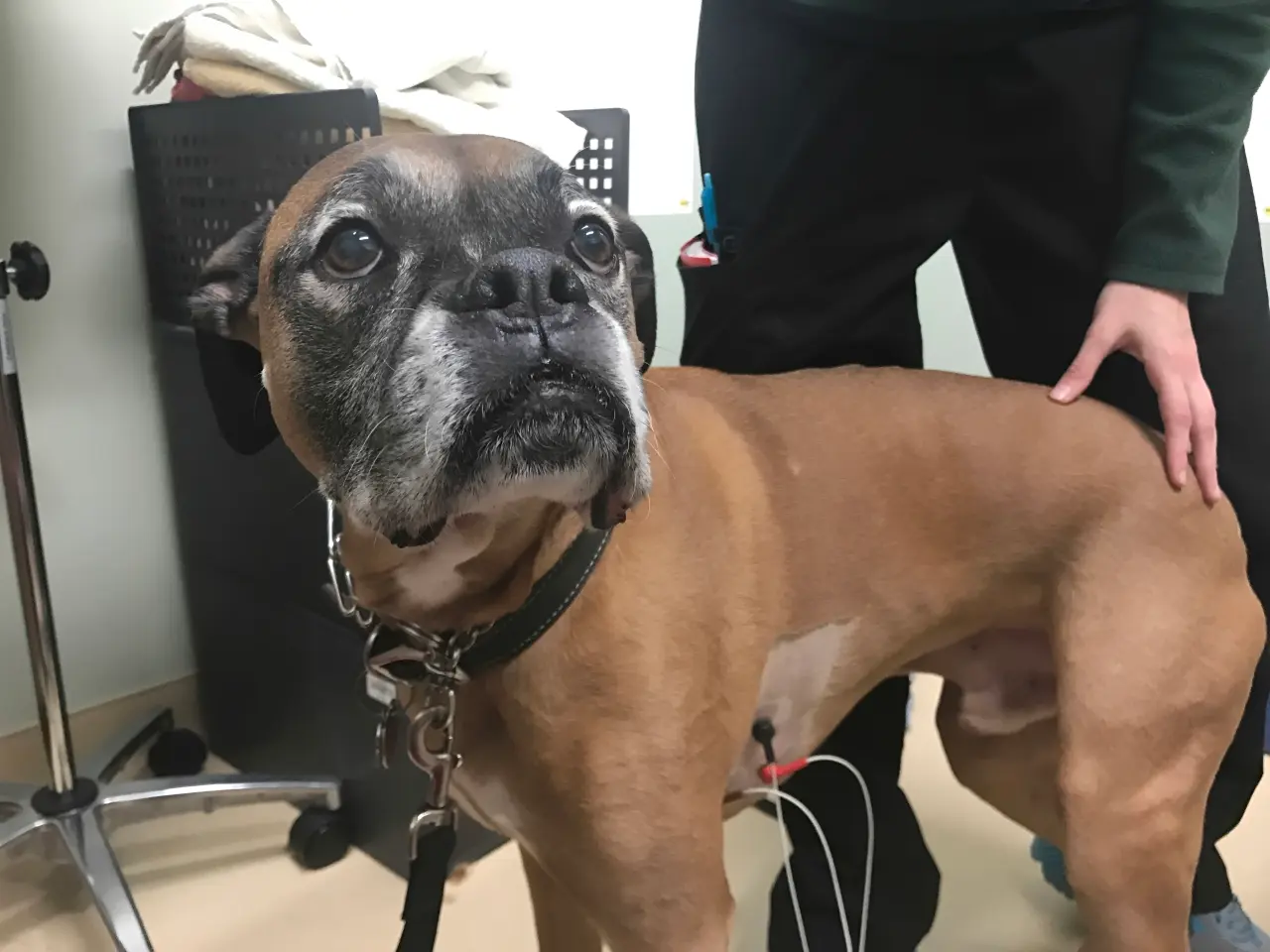
AI-powered clinical assessment helps you evaluate your Boxer’s cardiac concerns objectively, providing structured guidance while you prepare for your veterinary consultation.
Boxers are genetically predisposed to several serious cardiac conditions, including arrhythmogenic right ventricular cardiomyopathy (ARVC) and aortic stenosis. These conditions can cause life-threatening arrhythmias and sudden cardiac events requiring early detection and management.
While some Boxers show no early warning signs, others may present with exercise intolerance, fainting, or respiratory changes. Objective monitoring helps distinguish between normal behavior and symptoms requiring immediate cardiac evaluation. Veterinary AI provides structured clinical assessment to support your observations and facilitate productive veterinary consultations.
Understanding these potential causes helps you identify cardiac concerns early and seek appropriate veterinary care.
ARVC (Boxer Cardiomyopathy)
Genetic arrhythmia disorder causing dangerous heart rhythms and fainting; common in Boxers
Aortic Stenosis
Narrowing of the aortic valve reduces blood flow; causes fainting and exercise intolerance
Dilated Cardiomyopathy (DCM)
Enlarged heart with reduced pumping ability; causes weakness and breathing difficulty
Heart Valve Disease
Mitral valve degeneration causing murmurs and heart failure; common in older Boxers
Infectious Diseases
Heartworm disease or bacterial endocarditis can damage the heart; requires prompt treatment
Age-Related Degeneration
Progressive cardiac changes with aging; regular monitoring is essential for early detection
✦ If your Boxer shows cardiac concerns, early detection is critical. Veterinary AI provides real-time clinical triage tailored to breed-specific risks; helping you distinguish between normal behavior and conditions requiring prompt veterinary evaluation with clarity and confidence.
Non-invasive, medically safe measures to support your Boxer and monitor for early heart-related changes
Resting Respiratory Rate
Count breaths per minute when sleeping; normal is 10-30; consistently elevated rates warrant veterinary attention
Activity and Exercise Tolerance
Note any reluctance to exercise, weakness, or prolonged recovery after activity; these may indicate cardiac compromise
Fainting Episode Documentation
Record frequency, duration, and triggers; note what happens before, during, and after episodes for your veterinarian
Gum Color and Mucous Membranes
Check gum color daily (normal: pink); pale, blue, or brick-red gums indicate urgent cardiac concern
Weight and Appetite Monitoring
Track weight weekly; sudden loss may indicate heart failure. Note any decreased appetite or difficulty eating
Emergency Preparedness
Know nearest 24-hour emergency vet; have transport ready; keep cardiac event documentation accessible
⚠ These are supportive measures only. They do not replace professional veterinary assessment or treatment. Always consult your veterinarian for definitive guidance.
TESTIMONIALS
Timely, clinically-grounded support for every stage of your Boxer's heart assessment
When your Boxer shows cardiac signs and you cannot determine whether they are breed-normal or conditions requiring immediate veterinary evaluation.
If your Boxer shows persistent exercise intolerance, increased coughing, or more frequent fainting episodes; these may indicate progressive heart disease.
When you need clinically-grounded guidance while preparing the exact history (symptoms, episode frequency, and all clinical observations) your veterinarian needs for cardiac evaluation.
💡 Always trust your instincts. If you're concerned about your Boxer's heart, Veterinary AI provides immediate, evidence-based assessment; but never delays seeking emergency care when your dog shows fainting, collapse, or difficulty breathing.
These warning signs require urgent action, supported by Veterinary AI's core tools.
Fainting (syncope) or collapse is flagged as a critical emergency; this may indicate dangerous cardiac arrhythmia requiring immediate veterinary intervention.
Difficulty breathing or rapid breathing at rest (tachypnea) triggers high-risk scoring; this may indicate heart failure requiring immediate emergency evaluation.
Pale, blue, or brick-red gums elevate urgency to critical; this indicates poor oxygenation or circulatory compromise requiring emergency care.
Weakness, staggering, or inability to stand is assessed as urgent; this may indicate severe arrhythmia or cardiac output compromise.
History of fainting episodes, heart murmurs, or arrhythmia is documented for rapid handover; this history is critical for emergency cardiac evaluation.
Any acute cardiac symptoms, medication history, and episode timeline is compiled into a vet-ready report; this facilitates rapid emergency handover and cardiology consultation.
Any of these signs? Do not wait.
Veterinary AI prepares a clinical summary for your veterinarian while you travel, but immediate emergency veterinary attention is essential for severe Boxer heart concerns.
Flexible, cancel anytime
Best value for your pet
Just €7.58/month
Thanks for your interest in Veterinary AI. We'll notify you as soon as your AI consultation is ready. Check your email for confirmation.
More and more pet owners trust Veterinary AI for their pet's health. Get instant AI consultations, track medical records, set vaccine reminders, and access expert guidance — all from your phone. No waiting rooms, no appointments. Start now.

Everything you need to know about Boxer heart problems and how Veterinary AI can help. Can't find what you're looking for?
Start Symptom AssessmentBoxers are prone to ARVC (arrhythmic cardiomyopathy), aortic stenosis, and dilated cardiomyopathy (DCM). Regular cardiac screening is essential.
Watch for fainting (syncope), exercise intolerance, coughing, rapid breathing at rest, or lethargy. Any of these require immediate attention.
Yes, with early detection, treatment may include medications (antiarrhythmics, vasodilators), dietary management, and regular monitoring by a cardiologist.
Diagnosis involves ECG, Holter monitoring (24-hour heart rhythm recording), echocardiography, and genetic testing for the ARVC mutation.
Seek immediate emergency care for fainting, difficulty breathing, pale gums, collapse, or sudden weakness. These signs are potentially life-threatening.