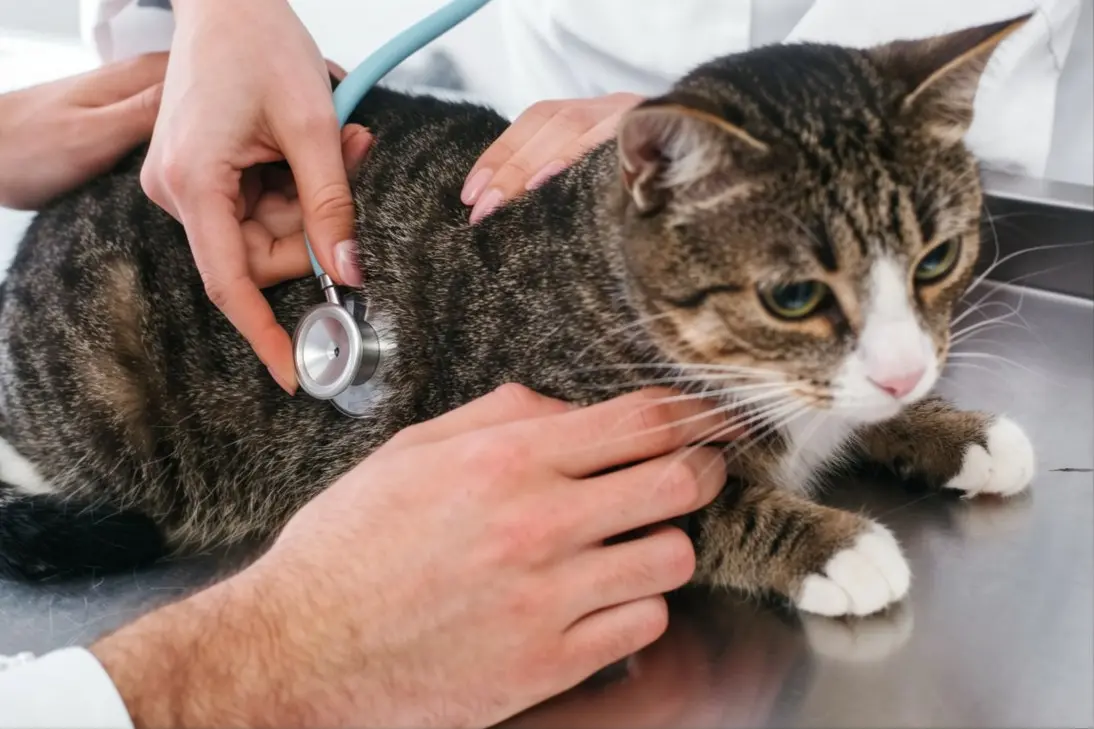
Understand your cat’s cardiac signs with AI-assisted clinical reasoning. Get objective, evidence-based triage guidance to help you assess urgency and prepare meaningfully for your in-person veterinary consultation.
Feline heart disease often progresses silently, with symptoms emerging subtly as the heart struggles to maintain adequate circulation. Clinical manifestations (respiratory effort, lethargy, or hindlimb paresis) typically indicate compromised cardiac output or fluid accumulation; early recognition directly influences outcomes.
While these symptoms warrant serious attention, panic serves no clinical purpose. Objective, systematic triage empowers you to distinguish between concerning developments and true emergencies. Veterinary AI provides structured guidance that supports, not replaces, your veterinarian’s diagnostic expertise.
Feline cardiac symptoms arise from various underlying conditions, ranging from manageable to severe.
Mild Stress or Anxiety
Emotional triggers can elevate heart rate and mimic cardiac distress in sensitive cats.
Age-Related Physiological Changes
Normal aging may reduce cardiac reserve without indicating primary structural heart disease.
Hyperthyroidism-Induced Cardiac Stress
Excess thyroid hormone increases cardiac workload, potentially leading to secondary heart failure.
Early Hypertrophic Cardiomyopathy (HCM)
Thickened heart muscle impairs ventricular filling; the most common feline cardiac condition.
Systemic Hypertension
Elevated blood pressure damages cardiac and vascular structures over time, increasing afterload.
Advanced Congestive Heart Failure
Fluid accumulation in lungs or chest cavity requires immediate intensive medical management.
✦ This list represents common differentials but does not constitute a complete diagnosis. Persistent cardiac symptoms (elevated respiratory rate, lethargy, exercise intolerance) warrant veterinary evaluation to rule out structural, functional, and systemic pathology. Veterinary AI provides real-time clinical triage tailored to feline-specific cardiac risks, helping you distinguish between manageable concerns and conditions requiring prompt veterinary attention with clarity and confidence.
Non-invasive, medically safe measures to support your cat and monitor for cardiac changes
Resting Respiratory Rate Monitoring
Count breaths per minute when your cat is resting or sleeping (normal: 20-30); record daily to detect early changes
Activity and Energy Level Observation
Monitor for lethargy, hiding behavior, reluctance to move, or reduced playfulness; note any progressive decline
Appetite and Weight Monitoring
Track daily food intake and weekly weight (if possible); reduced appetite or weight loss may signal cardiac progression
Hydration and Water Access
Ensure fresh water is always accessible; place multiple bowls in quiet, easily accessible locations to encourage drinking
Stress Reduction and Environmental Management
Maintain a calm, quiet environment; minimize handling and activity that could increase cardiac workload
Clinical Summary Preparation
Document respiratory rate, energy level, appetite, weight, hiding behavior, and timeline of changes for your veterinarian
⚠ These guidelines are supportive measures only. They do not treat cardiac conditions or replace professional veterinary assessment. Any cat showing labored breathing, collapse, pale gums, or severe lethargy requires immediate emergency care.
TESTIMONIALS
Timely, clinically-grounded support for every stage of your cat's cardiac assessment
When your cat shows heart disease symptoms (elevated respiratory rate, lethargy, or reduced appetite) and you cannot determine whether it signals early cardiac changes or a serious condition like congestive heart failure requiring immediate veterinary attention.
If your cat's respiratory rate remains consistently elevated (above 30 breaths per minute), or lethargy, hiding behavior, appetite loss, or labored breathing worsen over time; these may indicate progressive cardiac disease requiring urgent evaluation.
When you need clinically grounded, exportable guidance to maximize the effectiveness of your upcoming veterinary consultation; including a structured clinical summary documenting respiratory rate, energy level, appetite changes, and a timeline of observed symptoms.
💡 Always trust your instincts. If you are concerned about your cat's heart health, Veterinary AI provides immediate, evidence-based assessment; but never delays seeking emergency care when your cat shows labored breathing with open-mouth panting, pale or blue gums, collapse, or sudden profound weakness.
These warning signs require urgent action, supported by Veterinary AI's core tools when your cat shows heart disease symptoms and related signs.
Labored breathing with open-mouth panting is flagged as a critical emergency; this may indicate pulmonary edema, pleural effusion, or severe cardiac failure requiring immediate intervention.
Pale or blue-tinged gums (cyanosis) with respiratory distress triggers a critical alert; this indicates severe hypoxemia associated with cardiac failure requiring immediate evaluation.
Sudden collapse or inability to stand signals critical decompensation; this may indicate cardiac arrhythmia, severe outflow obstruction, or acute heart failure requiring immediate life-saving care.
Resting respiratory rate consistently above 40 breaths per minute indicates severe cardiac compromise; urgent echocardiographic and radiographic evaluation is essential.
Rapidly distended abdomen with respiratory distress requires organized data for your vet; our report consolidates both cardiac and pleural signs for rapid diagnostic evaluation.
Progressive weakness with cold extremities and reduced pulse quality requires comprehensive data; our summary documents respiratory rate, cardiac history, and timeline of symptom progression to help your emergency veterinarian expedite triage.
Any of these signs? Do not wait.
Veterinary AI prepares a clinical summary for your veterinarian while you travel, but immediate emergency veterinary attention is essential for labored breathing, pale/blue gums, collapse, respiratory rate above 40 breaths per minute, or progressive weakness in cats.
Flexible, cancel anytime
Best value for your pet
Just €7.58/month
Thanks for your interest in Veterinary AI. We'll notify you as soon as your AI consultation is ready. Check your email for confirmation.
More and more pet owners trust Veterinary AI for their pet's health. Get instant AI consultations, track medical records, set vaccine reminders, and access expert guidance — all from your phone. No waiting rooms, no appointments. Start now.
Everything you need to know about cat heart disease symptoms and how Veterinary AI can help. Can't find what you're looking for?
Start Cardiac Symptom AssessmentEarly signs include subtle lethargy, reduced activity, increased sleeping, and slightly elevated resting respiratory rate (over 30 breaths per minute). Many cats show no obvious signs initially.
Normal resting respiratory rate is 20-30 breaths per minute. Abnormal signs include rates above 30, open-mouth breathing, abdominal effort, or labored breathing at rest.
Appetite may remain normal in early stages. Reduced appetite often indicates disease progression or concurrent illness; consult your vet if appetite changes occur.
Progression varies significantly. Some cats stabilize for years with appropriate management, while others deteriorate rapidly. Regular monitoring and timely intervention are essential.
Not necessarily. Many cats respond well to management and maintain good quality of life. Early detection and appropriate cardiac care significantly improve outcomes and survival times.