
Veterinary AI provides objective, evidence-based symptom assessment to help you understand your dog’s condition and communicate effectively with your veterinarian.
Ear mites (Otodectes cynotis) are highly contagious parasitic mites that infest the ear canal, causing intense itching and inflammation. These microscopic parasites feed on skin debris and ear wax, leading to dark, crumbly discharge and significant discomfort. Common signs include head shaking, ear scratching, and dark brown waxy discharge.
While ear mite infestations are not typically life-threatening, they cause considerable discomfort and can lead to secondary infections if untreated. Veterinary AI helps you document symptom progression objectively, providing structured data that supports your veterinarian’s diagnostic process without replacing professional clinical judgment.
Addison’s disease symptoms arise from adrenal insufficiency and related factors.
Highly contagious mite causing intense pruritus; often starts on ears and elbows.
Normal skin mite causing disease in immunocompromised dogs; localized or generalized.
Surface-dwelling mites causing "walking dandruff" and mild to moderate pruritus.
Ear mites causing intense itching of the ears and surrounding head area.
Underlying conditions that allow normal skin mites to proliferate excessively
Stress, poor nutrition, or concurrent diseases that compromise skin health.
🐾 – The conditions listed above are potential causes of ear mite symptoms. Proper diagnosis through veterinary microscopic examination is essential for appropriate treatment. Do not self-diagnose or self-medicate your dog.
Practical, non-invasive actions to support your dog's ear health and track symptom progression
Isolate Affected Dog
Prevent transmission to other animals during active infestation
Document Symptom Progression
Note scratching intensity, head shaking, and discharge changes
Maintain Ear Hygiene
Clean the outer ear as directed by your veterinarian; avoid deep cleaning
Avoid Over-the-Counter Products
Never apply human ear drops or home remedies without veterinary guidance
Monitor for Secondary Infections
Watch for odor, redness, swelling, or worsening symptoms
Schedule Veterinary Evaluation
Consult your vet for microscopic confirmation and treatment plan
💡 Ear mites require proper veterinary diagnosis and treatment. Never apply human ear drops, oil, or over-the-counter products without veterinary guidance. Incorrect treatment can worsen the condition or damage the ear canal. Always consult your vet for appropriate diagnostic testing (microscopic examination) and prescription treatment.
TESTIMONIALS
Timely, clinically-grounded support for every stage of your dog's ear health journey
When your dog shows ear mite symptoms and you're unsure of the severity, Veterinary AI provides evidence-based triage to distinguish between benign ear conditions and signs requiring immediate otic evaluation.
If intense scratching or head shaking persists for more than 24 hours, or your dog shows ear pain, swelling, or fever, Veterinary AI helps you assess urgency and compile a timeline for your vet.
When you need clinically-grounded guidance to manage the next days safely while preparing the exact history (onset, progression, discharge changes, and accompanying signs) your veterinarian needs for an informed otic consultation.
💡 Always trust your instincts. If you're concerned about your dog's ear symptoms, Veterinary AI provides immediate, evidence-based assessment; but never delays seeking emergency care when your dog shows severe ear pain, head tilt, circling, fever, or any signs of inner ear disease.
These warning signs require urgent action, supported by Veterinary AI's core tools.
Severe ear pain with head tilt or circling is flagged as a potential inner ear disease requiring immediate emergency attention.
Ruptured eardrum with bleeding or discharge is identified as a potentially serious otic injury requiring urgent care.
Fever with ear inflammation and systemic signs is assessed for infection severity at any hour.
Facial paralysis or neurological signs with ear symptoms trigger an elevated urgency assessment.
Known ear mites with sudden symptom worsening is compiled into a vet-ready report.
Concurrent systemic signs (vomiting, diarrhea, collapse) with ear symptoms are documented and exported for rapid emergency handover.
Any of these signs? Do not wait.
Veterinary AI prepares a clinical summary for your veterinarian while you travel, but immediate veterinary attention is essential.
Flexible, cancel anytime
Best value for your pet
Just €7.58/month
Thanks for your interest in Veterinary AI. We'll notify you as soon as your AI consultation is ready. Check your email for confirmation.
More and more pet owners trust Veterinary AI for their pet's health. Get instant AI consultations, track medical records, set vaccine reminders, and access expert guidance — all from your phone. No waiting rooms, no appointments. Start now.
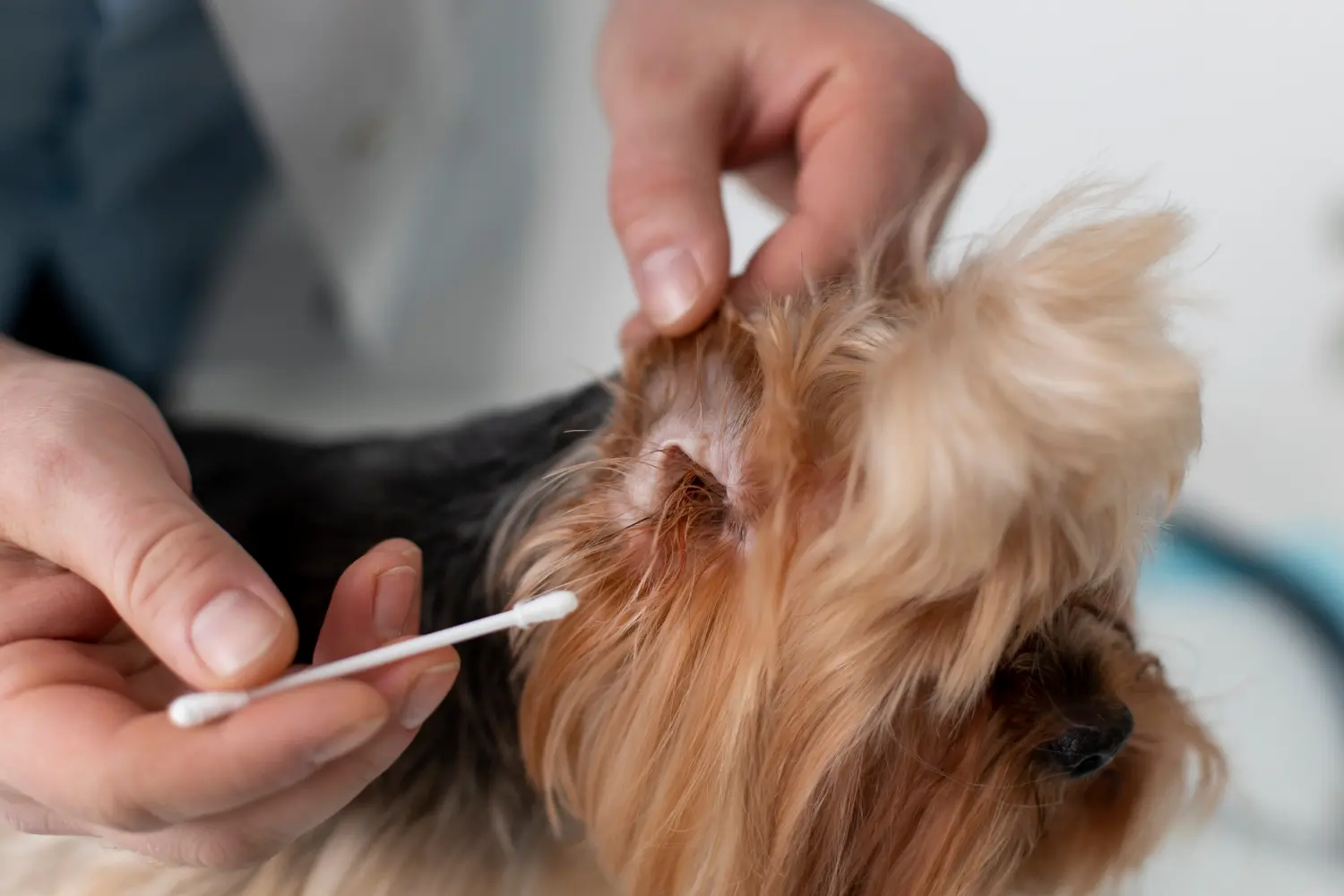
Everything you need to know about ear mites in dogs and how Veterinary AI can help. Can't find what you're looking for?
Start Symptom AssessmentEarly signs include intense ear scratching, head shaking, dark brown crumbly discharge, and a foul odor from the ears.
Ear mites are species-specific but can cause temporary skin irritation in humans. They are primarily transmitted between animals.
Yes, ear mites are typically curable with appropriate veterinary treatment, including prescription ear drops, topical medications, and environmental decontamination.
Diagnosis requires microscopic examination of ear discharge to identify the presence of Otodectes cynotis mites.
Untreated ear mites can lead to severe ear infections, hearing loss, ruptured eardrum, and secondary bacterial or yeast infections.