Evaluate your Persian cat’s eye health with AI-driven clinical guidance. Understand common ocular conditions, monitor symptoms, and prepare data for your veterinarian without replacing their expert care.
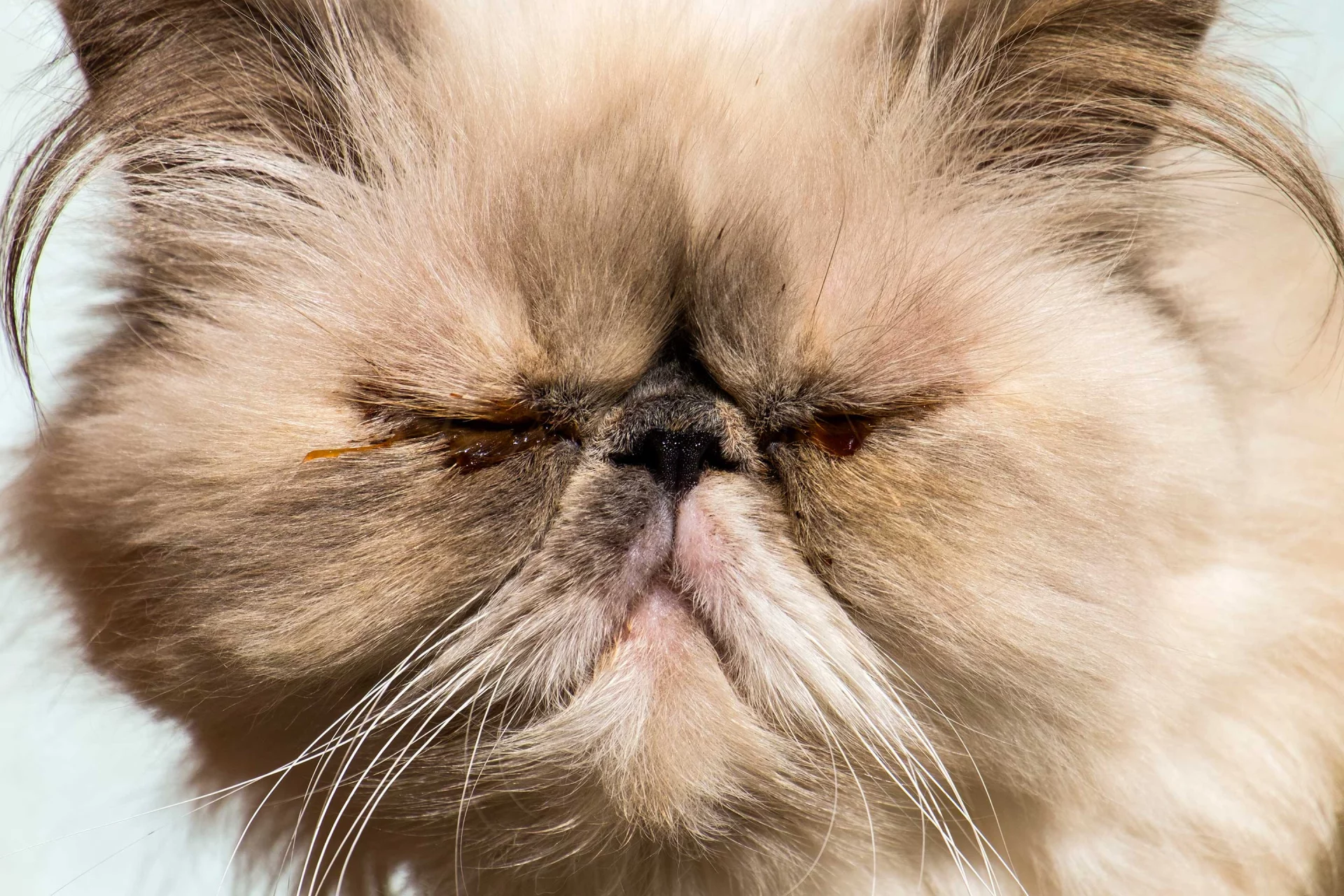
Persian cats have brachycephalic (flat-faced) anatomy that predisposes them to a range of ocular issues. Their shallow orbits, prominent eyes, and abnormal tear drainage (epiphora) make them vulnerable to conditions including corneal ulcers, entropion, cherry eye, and chronic conjunctivitis. Routine eye care and early detection are essential for this breed.
While some tear staining and mild discharge are common in Persians, persistent redness, squinting, or obvious discomfort indicate underlying pathology requiring veterinary attention. Objective triage helps you distinguish between breed-normal features and conditions that threaten vision, reducing anxiety while ensuring timely veterinary intervention.
Persian cats may develop eye problems for various reasons, listed from breed-related to severe conditions.
Epiphora (Excessive Tearing)
Abnormal tear drainage due to brachycephalic anatomy causes chronic tearing and facial staining; common in Persians.
Conjunctivitis
Inflammation of the conjunctiva from infections, allergens, or irritants; common in Persians due to facial anatomy.
Corneal Ulcer
Abrasion or infection of the cornea; often secondary to trauma, entropion, or dry eye; requires prompt treatment.
Entropion
Inward rolling of the eyelid causing eyelashes to rub against the cornea; painful and vision-threatening.
Cherry Eye (Prolapsed Nictitans Gland)
Protrusion of the third eyelid gland; common in brachycephalic breeds; requires surgical correction to prevent complications.
Keratoconjunctivitis Sicca (Dry Eye)
Inadequate tear production leading to chronic irritation, corneal damage, and vision loss; common in brachycephalic breeds.
✦ This list represents common causes of eye problems in Persian cats but does not constitute a complete diagnosis. Persian cats have brachycephalic (flat-faced) anatomy with shallow orbits and prominent eyes, making them highly susceptible to ocular conditions. Persistent squinting, redness, pawing at the eye, or visible corneal defects require immediate veterinary evaluation. Veterinary AI provides real-time clinical triage tailored to Persian cat eye health, helping you distinguish between breed-related features and sight-threatening conditions requiring prompt veterinary attention with clarity and confidence.
Non-invasive, medically safe measures to support your Persian cat's eye health and monitor for eye problems
Gently Wipe Away Discharge
Use a warm, damp, soft cloth to wipe outward from the inner corner; use a clean area for each eye
Observe for Squinting and Redness
Document frequency and severity of squinting, redness, or changes in eye appearance; contact vet if persistent
Check for Foreign Bodies
Look for dust or hair that may irritate the eye; do NOT attempt to remove embedded objects
Monitor for Pawing at the Eye
Pawing or rubbing indicates discomfort requiring veterinary evaluation; use an Elizabethan collar if needed
Keep the Eye Area Clean
Wipe away crusting to prevent secondary skin infections from chronic tearing; keep the area dry
Do NOT Use Human Eye Drops
Never use human eye drops, contact lens solution, or ointments without veterinary guidance (many are toxic to cats)
⚠ These guidelines are supportive measures, not treatment protocols. Persian cats have brachycephalic anatomy that predisposes them to corneal ulcers and other sight-threatening conditions. If your cat shows persistent squinting, redness, pawing at the eye, cloudiness, or a visible corneal defect, seek veterinary evaluation immediately. Do not delay seeking professional care.
TESTIMONIALS
Timely, clinically-grounded support for every stage of your Persian cat's eye health assessment
When you notice eye redness, discharge, or squinting and need help assessing whether it is a breed-related feature or a sight-threatening emergency.
If your Persian cat has a history of eye problems, chronic tearing, or breed-related risk factors (brachycephalic anatomy) and you need guidance on monitoring and early detection.
When you need clinically grounded, exportable guidance to maximize the effectiveness of your upcoming veterinary visit; including a structured summary documenting eye symptoms, discharge type, and observations.
💡 Always trust your instincts. If you are concerned about your Persian cat's eye health, Veterinary AI provides immediate, evidence-based assessment; but never delays seeking emergency care when a cat shows cloudiness, a visible corneal defect, severe redness, or is in obvious pain. Persian cats are highly susceptible to corneal ulcers which can progress rapidly. Seek immediate veterinary care for any emergency signs.
Eye problems in Persian cats can rapidly progress to sight-threatening emergencies. These warning signs require prompt veterinary attention, supported by Veterinary AI's core tools when your Persian cat shows signs of ocular distress.
A visible corneal ulcer (cloudy area or defect on the eye) is a sight-threatening emergency; our AI flags this as critical and recommends immediate veterinary intervention.
Sudden onset of severe squinting and pain indicates acute ocular injury requiring immediate evaluation and pain management.
Eye injury with squinting and redness requires organized data; our report consolidates symptoms, duration, and progression for your emergency veterinarian.
Protrusion of the third eyelid gland (cherry eye) requires prompt treatment to prevent secondary complications; our AI flags this for urgent evaluation.
Severe redness, swelling, or thick yellow/green discharge signals infection requiring urgent antibiotic therapy and diagnostic evaluation.
Progressive eye symptoms or worsening pain requires comprehensive data; our summary documents all observations to help your emergency veterinarian expedite diagnosis and treatment.
🚨 Any of these signs? Seek emergency care NOW.
Veterinary AI prepares a clinical summary for your emergency veterinarian while you prepare, but prompt emergency attention is essential for Persian cats with cloudy eyes, visible corneal defects, severe squinting, pawing at the eye, or thick discharge. Persian cats are highly susceptible to corneal ulcers which can progress rapidly. Transport your cat to the nearest emergency animal hospital immediately. Do not delay seeking care.
Flexible, cancel anytime
Best value for your pet
Just €7.58/month
Thanks for your interest in Veterinary AI. We'll notify you as soon as your AI consultation is ready. Check your email for confirmation.
More and more pet owners trust Veterinary AI for their pet's health. Get instant AI consultations, track medical records, set vaccine reminders, and access expert guidance — all from your phone. No waiting rooms, no appointments. Start now.
Everything you need to know about Persian cat eye problems and how Veterinary AI can help. Can't find what you're looking for?
Start Persian Cat Eye AssessmentPersian cats have brachycephalic (flat-faced) anatomy with shallow eye sockets and abnormal tear drainage, predisposing them to corneal exposure, tearing, and infections.
Cherry eye is a prolapsed gland of the third eyelid that appears as a red mass at the inner corner of the eye. It requires surgical correction to prevent complications.
Use a warm, damp, soft cloth to gently wipe outward from the inner corner; use a clean area for each eye. Avoid rubbing or applying pressure.
Seek immediate care if the eye is cloudy, has a visible ulcer, is severely red, or if your cat is in obvious pain, squinting, or pawing at the eye.
Yes, untreated corneal ulcers, glaucoma, or severe infections can lead to vision loss or eye rupture. Prompt treatment is essential to preserve vision.