Understand your cat’s gastrointestinal signs with AI-assisted clinical reasoning. Get objective, evidence-based triage guidance to help you assess urgency and prepare meaningfully for your in-person veterinary consultation.
Feline constipation is characterized by infrequent, difficult, or absent defecation, often resulting from reduced colonic motility, dehydration, or mechanical obstruction. Clinical manifestations (straining in the litter box, producing small hard stools, or complete absence of feces) reflect the progressive accumulation of fecal material; early recognition prevents progression to obstipation (refractory constipation) and megacolon.
While constipation is common and often manageable, it can indicate serious underlying conditions. Objective, systematic triage empowers you to distinguish between simple dietary issues and potentially life-threatening obstructions. Veterinary AI provides structured guidance that supports, not replaces, your veterinarian’s diagnostic expertise.
Feline constipation originates from multiple clinical pathways, listed from mild to severe.
Dietary Factors and Dehydration
Low-fiber diets, inadequate water intake, and dry food can lead to dry, hard stools and reduced motility.
Obesity and Lack of Exercise
Reduced physical activity and excess weight contribute to decreased colonic motility and fecal retention.
Hairballs (Trichobezoars)
Accumulated hair in the gastrointestinal tract can cause partial or complete obstruction, especially in long-haired cats.
Pelvic Narrowing or Trauma
Previous pelvic fractures can narrow the pelvic canal, mechanically obstructing fecal passage through the colon.
Colonic Dysfunction (Megacolon)
Chronic constipation causes irreversible dilation and loss of colonic motility; requires medical or surgical intervention.
Underlying Metabolic Disease
Chronic kidney disease, hyperthyroidism, or electrolyte imbalances can contribute to reduced colonic motility.
✦ This list represents common differentials but does not constitute a complete diagnosis. Persistent constipation, straining without stool production for 48+ hours, vomiting, or abdominal discomfort warrants veterinary evaluation to rule out colonic dysfunction, pelvic abnormalities, and underlying metabolic disease. Do NOT administer laxatives or enemas without veterinary guidance. Veterinary AI provides real-time clinical triage tailored to feline-specific constipation risks, helping you distinguish between manageable concerns and conditions requiring prompt veterinary attention with clarity and confidence.
Non-invasive, medically safe measures to support your cat and monitor for constipation and related changes
Litter Box and Stool Monitoring
Monitor frequency of litter box visits, straining, vocalizing, and stool production; document size, consistency, and any blood or mucus
Hydration and Water Access
Ensure fresh water is always available; consider a water fountain to encourage drinking; hydration helps soften stool
Appetite and Food Intake Tracking
Monitor daily food consumption; document any decrease, refusal to eat, or changes in eating patterns
Vomiting and GI Monitoring
Document any vomiting (frequency, character), changes in stool consistency, or signs of abdominal discomfort
Energy Level and Activity Observation
Observe for lethargy, reluctance to move, hiding, or signs of discomfort; note any progressive deterioration
Clinical Summary Preparation
Document stool frequency, straining, appetite, vomiting, energy level, and any other observations for your veterinarian
⚠ These guidelines are supportive measures only. Do NOT administer any laxatives, enemas, or medications without veterinary guidance. Many human products are toxic to cats. Any cat showing severe straining, vomiting, lethargy, or abdominal pain requires immediate veterinary assessment.
TESTIMONIALS
Timely, clinically-grounded support for every stage of your cat's constipation assessment
When your cat shows constipation symptoms (straining in the litter box, producing hard stools or no stool) and you cannot determine whether it signals simple dietary issues or a serious condition like obstipation, megacolon, or obstruction requiring veterinary attention.
If your cat has been straining without producing stool for 48+ hours, is vomiting, showing lethargy, or experiencing abdominal discomfort; these may indicate obstipation, megacolon, or obstruction requiring urgent care.
When you need clinically grounded, exportable guidance to maximize the effectiveness of your upcoming veterinary consultation; including a structured clinical summary documenting litter box behavior, stool frequency/consistency, appetite, vomiting, and energy level.
💡 Always trust your instincts. If you are concerned about your cat's constipation, Veterinary AI provides immediate, evidence-based assessment; but never delays seeking care when your cat shows signs of severe straining, vomiting, lethargy, or abdominal pain. Do NOT administer laxatives or enemas without veterinary guidance.
These warning signs require urgent action, supported by Veterinary AI's core tools when your cat shows constipation symptoms and related signs.
Severe straining with no stool production for 48+ hours is flagged as a critical emergency; this may indicate obstipation or complete obstruction requiring immediate intervention.
Vomiting, especially with inability to keep water down, triggers a critical alert; this indicates severe gastrointestinal distress or ileus requiring immediate evaluation.
Lethargy, weakness, or collapse signals critical decompensation; this may indicate systemic illness, dehydration, or severe obstruction requiring immediate life-saving care.
Abdominal pain (vocalizing, hiding, or reluctance to be touched) indicates severe discomfort; urgent evaluation for megacolon, obstruction, or other serious conditions is essential.
Hard, distended abdomen on palpation requires organized data for your vet; our report consolidates stool history, straining duration, and abdominal findings for rapid diagnostic evaluation.
Signs of systemic illness (fever, dehydration, or severe lethargy) require comprehensive data; our summary documents all observed changes and clinical history to help your emergency veterinarian expedite triage.
Any of these signs? Do not wait.
Veterinary AI prepares a clinical summary for your veterinarian while you travel, but immediate emergency veterinary attention is essential for severe straining with no stool for 48+ hours, vomiting, lethargy, collapse, or signs of abdominal pain in cats. Do NOT administer laxatives or enemas without veterinary guidance.
Flexible, cancel anytime
Best value for your pet
Just €7.58/month
Thanks for your interest in Veterinary AI. We'll notify you as soon as your AI consultation is ready. Check your email for confirmation.
More and more pet owners trust Veterinary AI for their pet's health. Get instant AI consultations, track medical records, set vaccine reminders, and access expert guidance — all from your phone. No waiting rooms, no appointments. Start now.
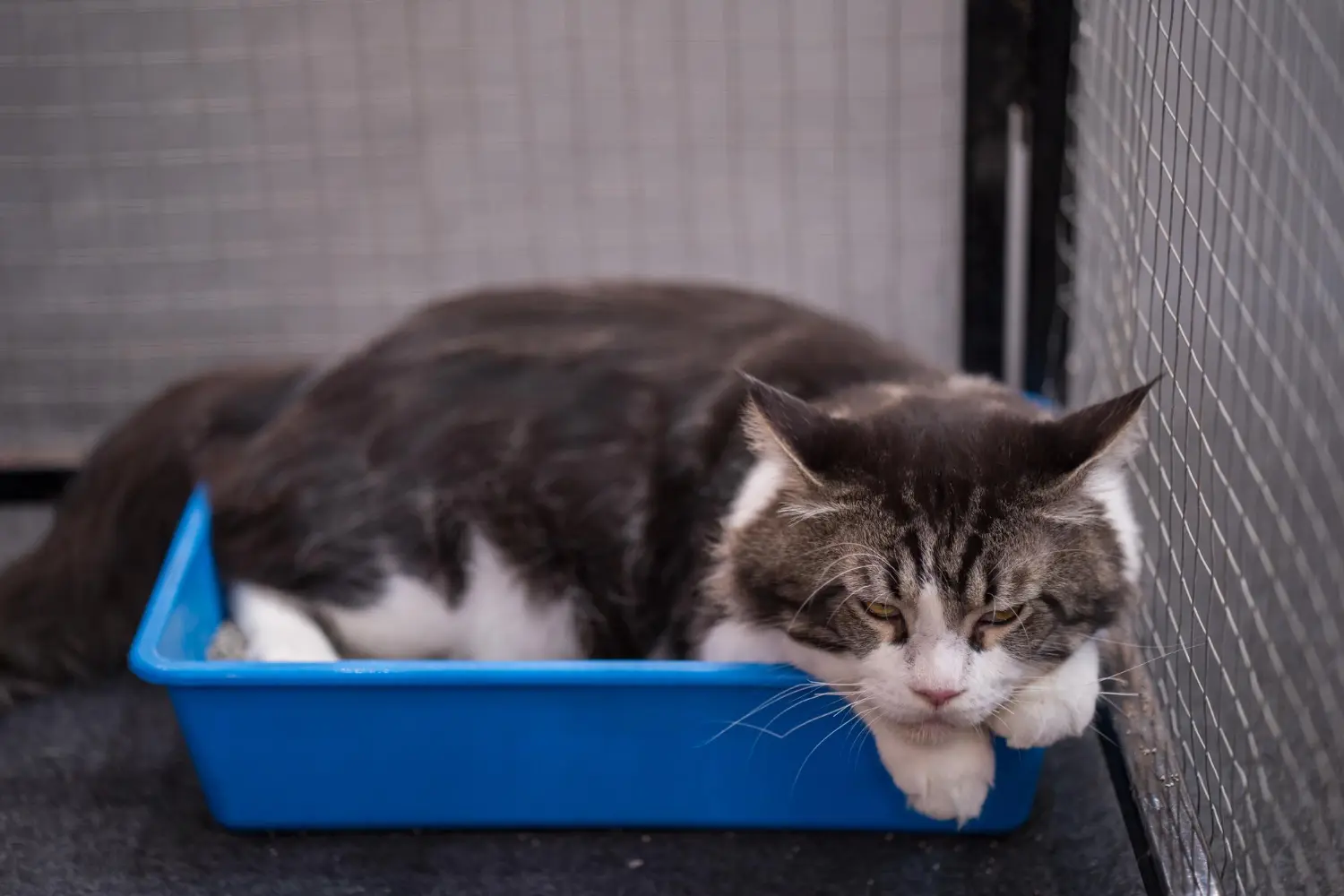
Everything you need to know about cat constipation and how Veterinary AI can help. Can't find what you're looking for?
Start Constipation AssessmentSigns include straining in the litter box, producing small hard stools or no stools, decreased appetite, vomiting, lethargy, and abdominal discomfort or pain.
Constipation becomes an emergency when a cat strains without producing stool for 48+ hours, vomits, shows lethargy, or has a hard distended abdomen. Severe constipation (obstipation) can lead to megacolon.
Causes include dehydration, low-fiber diets, hairballs, obesity, pelvic trauma, colonic dysfunction (megacolon), kidney disease, hyperthyroidism, and certain medications.
No. Never give human laxatives, enemas, or medications to cats without veterinary guidance. Many human products are toxic to cats and can cause serious complications.
Treatment may include dietary changes, increased hydration, medications (laxatives prescribed by a vet), or enemas. Severe cases may require manual disimpaction or surgery (for megacolon).