
Cat Poisoning: AI-Powered Clinical Triage

Get instant, evidence-based guidance to assess your cat’s potential toxic exposure. Veterinary AI helps you determine urgency and prepare for emergency veterinary care without replacing professional treatment.

VETERINARY AI FOR PET OWNERS

Understanding Poisoning in Cats: When Every Minute Counts

Cats are uniquely susceptible to toxins due to their limited hepatic glucuronidation pathways. Common poisons include lilies, antifreeze (ethylene glycol), human medications, insecticides, and household cleaners. Rapid triage is critical.

Cats are uniquely susceptible to toxins due to their limited hepatic glucuronidation pathways. Common poisons include lilies, antifreeze (ethylene glycol), human medications, insecticides, and household cleaners. Rapid triage is critical.

Veterinary AI

Assess your cat's poisoning symptoms with clinical precision

Common Causes of Cat Poisoning

Toxic exposures arise from several household substances, listed from mild to severe.

Household Cleaners

Bleach, ammonia, and detergents cause oral burns, vomiting, and respiratory distress upon ingestion or inhalation.

Toxic Plants

Tulips, sago palm, azaleas, and oleander cause gastrointestinal and cardiac toxicity; lilies cause kidney failure.

Insecticides and Pesticides

Permethrin (dog flea products) causes severe neurological toxicity; organophosphates are also highly dangerous.

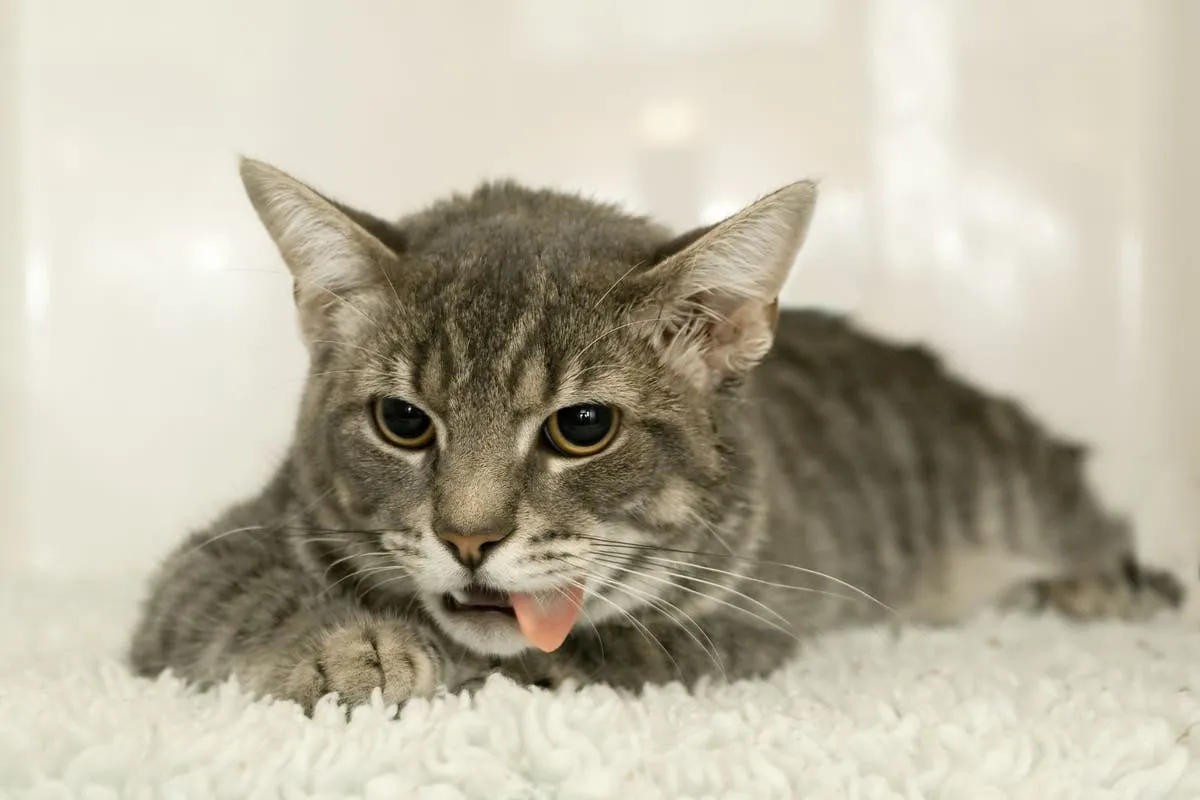
Cat showing signs of poisoning including vomiting and lethargy requiring emergency clinical assessment

Human Medications

Acetaminophen, ibuprofen, and antidepressants are highly toxic; cats lack proper detoxification enzymes.

Ethylene Glycol (Antifreeze)

Sweet-tasting liquid causing rapid kidney failure; ingestion of 1-2 teaspoons can be fatal without immediate treatment.

Lilies (Lilium spp.)

All parts are highly nephrotoxic; even pollen ingestion causes acute kidney failure requiring immediate emergency care.

This list represents common toxic exposures but does not constitute a complete diagnosis. Any suspected poisoning requires immediate veterinary consultation. Cats are uniquely susceptible to many toxins due to limited hepatic glucuronidation pathways. Do not induce vomiting without veterinary guidance. Veterinary AI provides real-time clinical triage tailored to feline toxic exposures, helping you distinguish between mild ingestions and life-threatening emergencies requiring immediate veterinary attention with clarity and confidence.

+0
Symptoms analyzed
by pet owners worldwide
+0
Pet owners trusting
AI for their pet's health
0/7
Available anytime
even at 2AM emergencies

Safe Home Care & Monitoring Guidelines

Non-invasive, medically safe measures to support your cat and monitor for poisoning symptoms

Remove the Toxin Immediately

Place the substance out of reach; keep the container or plant sample for identification by your veterinarian

Do NOT Induce Vomiting

Unless explicitly instructed by a veterinarian or poison control; inducing vomiting can worsen some toxicities

Observe and Document Symptoms

Record time of exposure, substance name, quantity, and symptom onset; note any progression for your veterinarian

Check Gums and Mucous Membranes

Look for pale, blue, or brick-red gums; these indicate poor oxygenation or toxin effects requiring immediate care

Monitor Respiratory Rate

Count breaths per minute; rapid breathing (>40/min) or difficulty breathing requires immediate veterinary attention

Keep Your Cat Calm and Warm

Reduce stress and movement; place in a quiet, comfortable area; do not offer food or water unless directed

These guidelines are temporary measures only. Poisoning is a life-threatening medical emergency. Do not delay seeking veterinary care. Call a pet poison control hotline (ASPCA: 888-426-4435) and transport your cat to the nearest emergency veterinary hospital immediately. Do not induce vomiting unless instructed by a professional. Do not offer food or water unless directed by a veterinarian.

TESTIMONIALS

OPYNIO Reviews Cat Poisoning Symptoms

When Can Veterinary AI Help You and Your Cat?

Timely, clinically-grounded support for every stage of your cat's poisoning assessment

Unsure About Severity?

When your cat has been exposed to a potential toxin and you cannot determine whether it signals a mild ingestion or a life-threatening emergency requiring immediate intervention.

Symptoms Developing or Worsening?

If your cat develops vomiting, lethargy, difficulty breathing, seizures, or decreased urination after suspected exposure; these may indicate progressive toxicity requiring immediate emergency care.

Pre-Emergency Preparation?

When you need clinically grounded, exportable guidance to maximize the effectiveness of your emergency veterinary visit; including a structured clinical summary documenting exposure details, symptom timeline, and toxin identification.

💡 Always trust your instincts. If you are concerned about possible poisoning, Veterinary AI provides immediate, evidence-based assessment; but never delays seeking emergency care when your cat shows seizures, difficulty breathing, collapse, or decreased urination. Poisoning is a life-threatening emergency. Call ASPCA Poison Control (888-426-4435) and transport your cat to the nearest emergency veterinary hospital immediately. Do not induce vomiting unless instructed by a professional.

When to Seek Immediate Emergency Care

Poisoning is a life-threatening emergency. These warning signs require immediate veterinary attention, supported by Veterinary AI's core tools when your cat shows poisoning symptoms and related signs.

Severe poisoning in cats requiring emergency care showing seizures, respiratory distress, and collapse
🚨 Instant Symptom Analysis & Risk Scoring

Seizures, tremors, or muscle twitching are flagged as a critical emergency; this may indicate severe neurotoxicity (e.g., permethrin, organophosphates) requiring immediate anticonvulsant therapy.

⚠️ Instant Symptom Analysis & Risk Scoring

Difficulty breathing, blue/pale gums, or collapse triggers the highest alert; these signs indicate severe systemic toxicity or anaphylaxis requiring immediate respiratory support.

🩸 24/7 Smart Triage & Urgency Assessment

Decreased or absent urination signals a complication; this is a hallmark of lily or antifreeze toxicity indicating kidney failure requiring immediate dialysis or fluid therapy.

🔄 24/7 Smart Triage & Urgency Assessment

Persistent vomiting, diarrhea, or bloody stools alongside known toxin exposure suggests severe gastrointestinal toxicity requiring immediate emergency evaluation.

📄 Exportable Clinical Summary Report

Neurological signs (disorientation, circling, head pressing) requires organized data for your emergency vet; our report consolidates exposure details, symptom chronology, and progression for rapid evaluation.

📋 Exportable Clinical Summary Report

Rapidly worsening symptoms or new signs developing requires comprehensive data; our summary documents all observations and timeline to help your emergency veterinarian expedite diagnosis and treatment.

🚨 Any of these signs? Seek emergency care NOW.

Veterinary AI prepares a clinical summary for your emergency veterinarian while you prepare, but prompt emergency attention is essential for seizures, difficulty breathing, collapse, decreased urination, or any severe symptom. Poisoning is a life-threatening emergency. Call ASPCA Poison Control (888-426-4435) immediately. Do NOT induce vomiting unless instructed. Bring the toxin or a photograph for identification.

Start Poison Symptom Assessment

Monthly

Flexible, cancel anytime

€9.99 /month
AI symptom assessment
Emergency guidance 24/7
Preventive care reminders
Wellness monitoring
Breed-specific health tips
Unlimited conversations
Start monthly plan
SAVE 24%

Annual

Best value for your pet

€90.99 /year

Just €7.58/month

AI symptom assessment
Emergency guidance 24/7
Preventive care reminders
Wellness monitoring
Breed-specific health tips
Priority support
Start annual plan
Veterinary AI provides clinical triage support and educational information; it does not constitute a diagnosis, treatment plan, or substitute for professional, in-person veterinary care.

By submitting you agree to our Privacy Policy

Veterinary AI

AI-Powered Pet Care 24/7

More and more pet owners trust Veterinary AI for their pet's health. Get instant AI consultations, track medical records, set vaccine reminders, and access expert guidance — all from your phone. No waiting rooms, no appointments. Start now.
FAQ

Frequently Asked
Questions

Everything you need to know about cat poisoning and how Veterinary AI can help. Can't find what you're looking for?

Start Poison Symptom Assessment

What are the signs of poisoning in cats?

Signs include vomiting, diarrhea, drooling, lethargy, difficulty breathing, seizures, pale or blue gums, decreased urination, and collapse. Symptoms vary by toxin.

What should I do if my cat ate a lily?

Lily ingestion is a medical emergency. Seek immediate veterinary care; even small amounts cause kidney failure. Call ASPCA Poison Control (888-426-4435) on your way.

Can I induce vomiting in a poisoned cat?

No, do NOT induce vomiting unless specifically instructed by a veterinarian or poison control; some toxins cause more damage when vomited (e.g., caustics, petroleum products).

Is antifreeze poisoning treatable in cats?

Antifreeze (ethylene glycol) poisoning is treatable if caught early (<6 hours). Immediate veterinary care with antidote therapy (4-MP or ethanol) is critical for survival.

How long does it take for poisoning symptoms to appear in cats?

Symptoms can appear within minutes to hours, depending on the toxin. Some toxins (e.g., lilies) take 24-72 hours to show kidney failure signs. Do not wait for symptoms.