Understand whether your cat’s inappropriate urination stems from a medical condition or behavioral issue through AI-powered triage guidance, designed to support your decision-making before and during your veterinary visit.
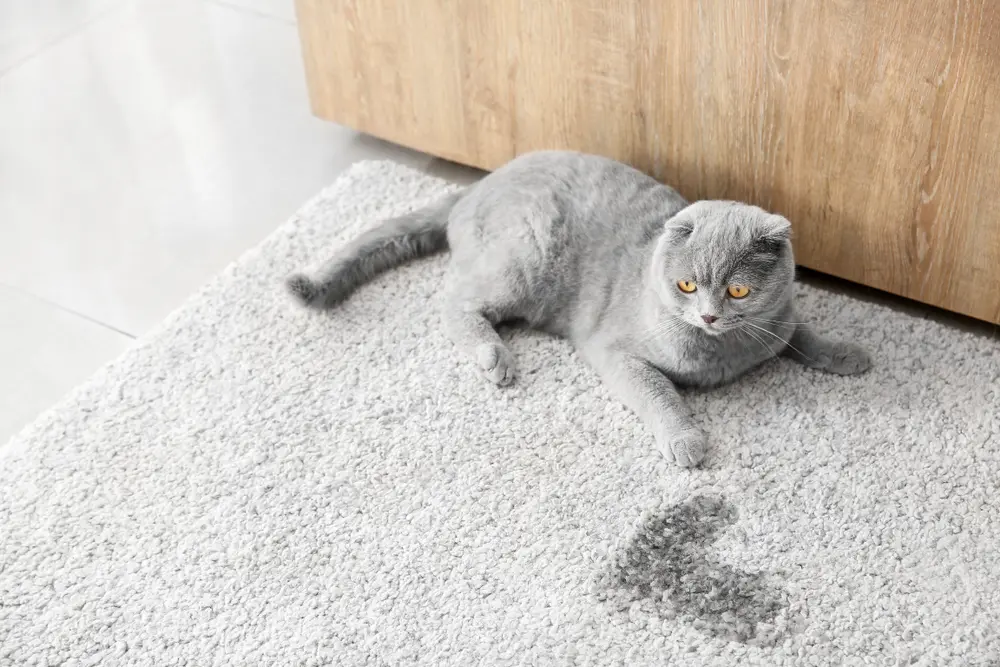
Inappropriate urination (eliminating outside the litter box) is one of the most common behavioral concerns in cats, yet up to 50% of cases have an underlying medical cause. Conditions like urinary tract infections, bladder stones, cystitis, and kidney disease can cause pain, urgency, and increased frequency, leading your cat to associate the litter box with discomfort.
Your frustration is valid; this behavior is stressful for both you and your cat. Do not punish your cat; this can worsen anxiety and the behavior. Medical causes must be ruled out first through veterinary examination. Early diagnosis can resolve the issue and restore harmony to your home.
Inappropriate urination stems from medical or behavioral causes; medical conditions must be ruled out first.
Bacterial infection causing painful, frequent urination; often with small amounts of urine and straining.
Bladder inflammation without infection; causes pain, frequent urination, and blood; often stress-related.
Mineral crystals or stones irritating the bladder; causes pain, blood, and straining; male cats at higher risk.
Chronic kidney disease leads to increased thirst and urine volume; cats may not reach the litter box in time.
Increased thirst and urine output; cats may urinate large volumes and have accidents outside the box.
Anxiety, household changes, litter box aversion, or territorial marking causing inappropriate urination.
This list is for educational purposes only. Only a veterinarian can provide an accurate diagnosis through physical examination and diagnostic testing.
Follow these steps to monitor your cat while arranging veterinary evaluation.
Do Not Punish
Never punish or scold; this increases stress and can worsen the behavior and medical condition
Monitor Litter Box Usage
Count trips to the box, note whether urine is produced (volume and frequency), check for straining
Track Urine Characteristics
Observe urine color (pink/red indicates blood), volume, and any unusual odor
Increase Water Intake
Provide fresh water daily; consider a water fountain to encourage drinking and support bladder health
Reduce Stressors
Maintain routine, provide hiding spots and vertical space; consider Feliway diffuser for anxiety
Clean Accidents Thoroughly
Use enzymatic cleaners to eliminate odor and prevent repeat marking; avoid ammonia-based cleaners
✦ These monitoring steps do not replace veterinary diagnosis. If your cat shows straining with no urine, pain, vomiting, or lethargy, seek emergency care immediately. Veterinary AI provides real-time guidance to help you document symptoms and determine urgency.
TESTIMONIALS
Timely, clinically-grounded support for every stage of your cat's inappropriate urination assessment
When your cat is peeing outside the box and you need to understand if this is a medical emergency or a behavioral issue.
If your cat shows straining, small-volume urination, vocalizing, blood in urine, or genital licking; medical evaluation is needed within 24-48 hours.
When you need clinically-grounded guidance to document symptoms (timeline, location, frequency, urine characteristics) for your veterinary consultation.
💡 Always rule out medical causes first. Up to 50% of inappropriate urination cases have an underlying medical condition. Veterinary AI provides immediate, evidence-based assessment to help you distinguish between medical and behavioral causes; but never delays seeking care when your cat shows signs of pain, obstruction, or systemic illness.
Red flags that require urgent veterinary attention; and how Veterinary AI supports each critical decision when your cat shows signs of urinary distress.
Straining with No Urine
Instant Risk Scoring flags urethral obstruction; especially in male cats; immediate emergency intervention required
Vocalizing or Severe Pain
Risk Scoring prioritizes acute obstruction or severe cystitis; immediate veterinary care required
Vomiting, Lethargy, or Collapse
24/7 Smart Triage detects systemic toxicity; escalate to ER immediately
Firm, Painful Bladder
Urgency Assessment identifies obstruction; immediate vet visit required
Blood in Urine with Severe Distress
Exportable Report documents urgency and symptoms for your emergency vet; go immediately
Male Cat with History of Urinary Issues
Exportable Report captures history for your emergency veterinarian; seek care now
🚨 These signs require immediate in-person emergency veterinary care. Veterinary AI is not a substitute for emergency medical attention. If your cat shows any of these red flags alongside inappropriate urination, do not delay; seek emergency care immediately.
Flexible, cancel anytime
Best value for your pet
Just €7.58/month
Thanks for your interest in Veterinary AI. We'll notify you as soon as your AI consultation is ready. Check your email for confirmation.
More and more pet owners trust Veterinary AI for their pet's health. Get instant AI consultations, track medical records, set vaccine reminders, and access expert guidance — all from your phone. No waiting rooms, no appointments. Start now.
Everything you need to know about inappropriate urination in cats, and how Veterinary AI can help. Can't find what you're looking for?
Start Symptom AssessmentSudden changes often indicate a medical issue (UTI, cystitis, bladder stones) or environmental stress. A veterinary exam should always be the first step to rule out medical causes.
Yes. UTIs cause painful, frequent urination, and cats may associate the litter box with pain, leading them to urinate elsewhere.
Not always. Medical conditions cause up to 50% of cases. Behavioral issues include stress, anxiety, litter box aversion, or territorial marking. A vet visit is essential first.
First, see a vet to rule out medical causes. Then, ensure clean litter boxes (one per cat + one extra), use appropriate litter types, place boxes in quiet locations, and address environmental stressors.
If your cat is straining with no urine output, vocalizing in pain, vomiting, lethargic, or has not urinated in 12+ hours, seek emergency care immediately.