Rabbit Sneezing: Clinical Triage Support

Evaluate your rabbit’s sneezing with AI-driven clinical guidance. Understand respiratory infection risks, monitor symptoms, and prepare data for your exotics veterinarian without replacing their expert care.

VETERINARY AI FOR PET OWNERS

Understanding Sneezing in Rabbits: When to Monitor and When to Act

Sneezing in rabbits is a common sign of upper respiratory disease, often referred to as “snuffles.” This condition is frequently caused by Pasteurella multocida or other bacterial pathogens. While occasional sneezing may be benign, persistent sneezing with nasal discharge indicates an active infection requiring veterinary attention. Rabbits are obligate nasal breathers, so any respiratory compromise is serious.

While an occasional sneeze from dust or hay particles is normal, persistent sneezing, especially with nasal discharge, lethargy, or reduced appetite, signals an infection that requires prompt evaluation. Objective triage helps you distinguish between environmental irritation and serious respiratory disease.

Veterinary AI

Assess your rabbit's sneezing with clinical precision

Common Causes of Sneezing in Rabbits

Rabbits may sneeze for various reasons, listed from mild to life-threatening.

Environmental Irritants

Dust, hay particles, strong odors, or poor ventilation causing occasional sneezing; resolves with environmental improvement.

Allergies

Allergic reactions to pollen, dust, or bedding materials causing sneezing and nasal irritation; may be seasonal.

Foreign Body

Grass seeds or other material lodged in nasal passages causing sneezing, discharge, and nasal irritation.

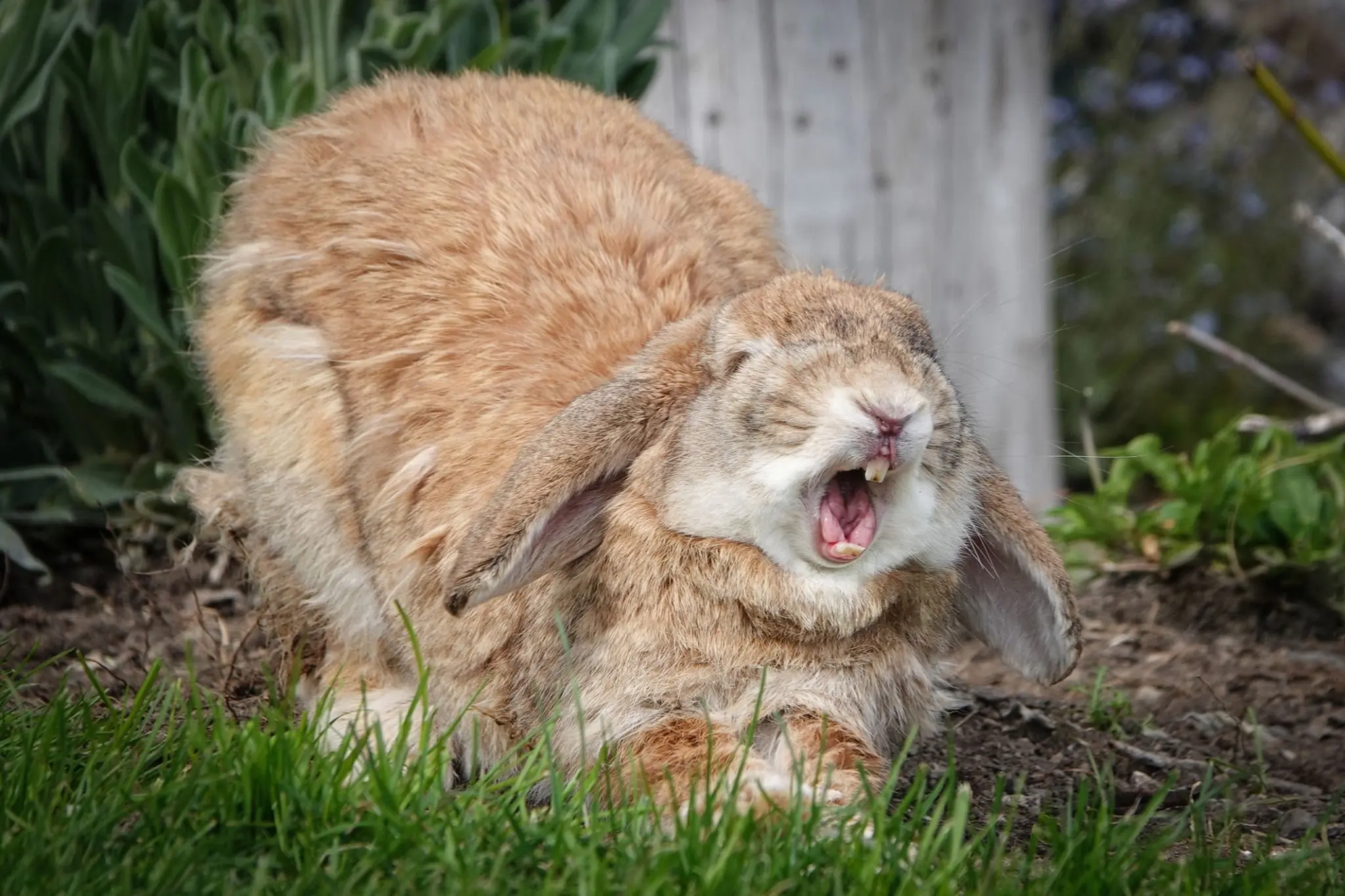
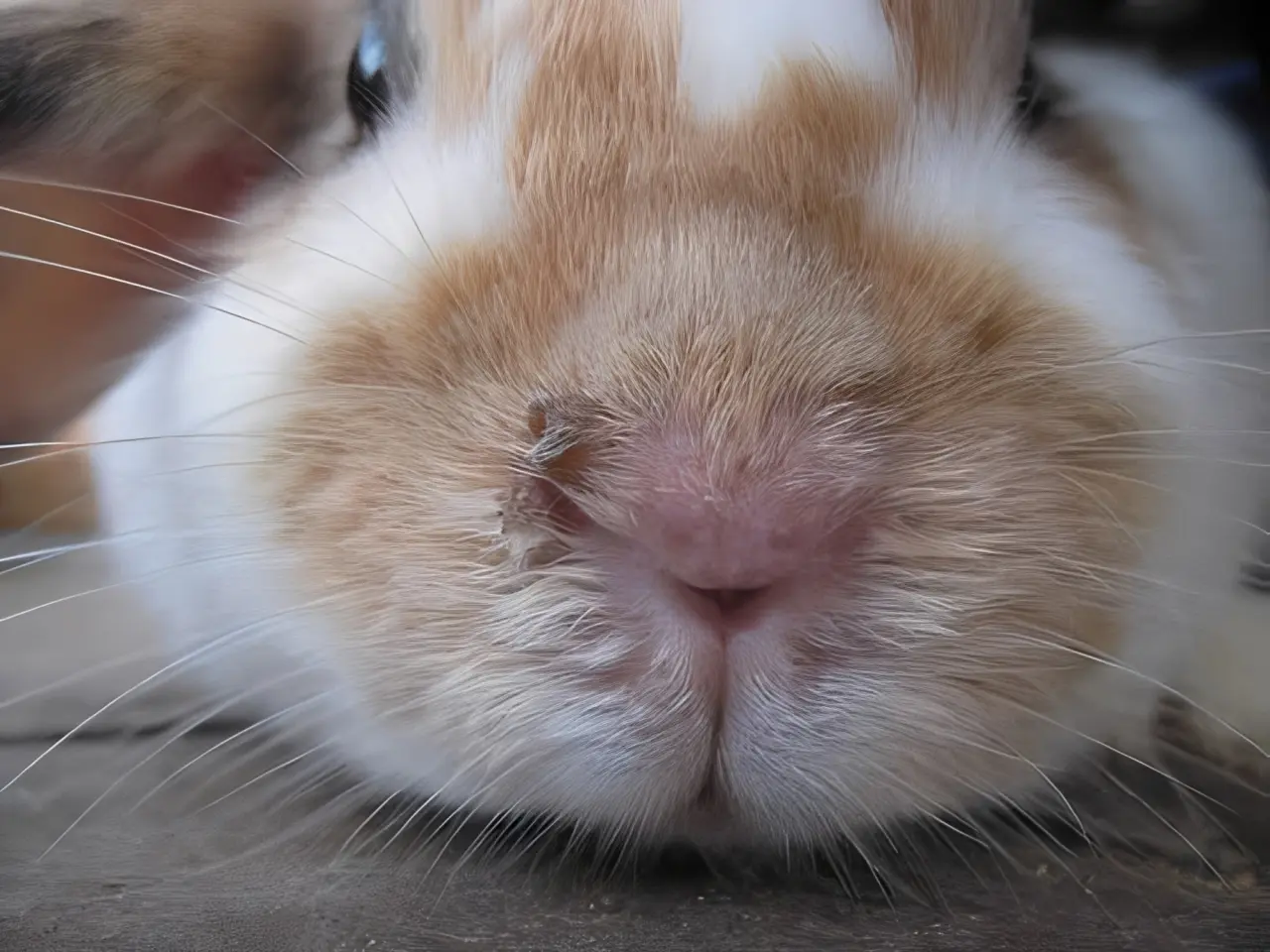
Rabbit sneezing, showing signs of respiratory infection including nasal discharge and conjunctivitis

Upper Respiratory Infection (Snuffles)

Bacterial infection (Pasteurella, Bordetella) causing sneezing, nasal discharge, and conjunctivitis; highly contagious.

Dental Disease

Overgrown tooth roots can extend into nasal passages, causing sneezing and nasal discharge; requires dental radiographs.

Lower Respiratory Disease

Pneumonia or lung pathology causing sneezing, coughing, and respiratory distress; requires immediate veterinary intervention.

This list represents common causes of sneezing in rabbits but does not constitute a complete diagnosis. Rabbits are obligate nasal breathers, making any respiratory compromise significant. Persistent sneezing with nasal discharge, especially if thick or colored, requires veterinary evaluation. Sneezing with lethargy, open-mouth breathing, or reduced appetite is a medical emergency. Veterinary AI provides real-time clinical triage tailored to rabbit respiratory health, helping you distinguish between environmental irritation and serious infections requiring prompt veterinary attention with clarity and confidence.

+0
Symptoms analyzed
by pet owners worldwide
+0
Pet owners trusting
AI for their pet's health
0/7
Available anytime
even at 2AM emergencies

Safe Home Care & Monitoring Guidelines

Non-invasive, medically safe measures to support your rabbit and monitor for sneezing and respiratory health

Monitor Sneezing Frequency and Discharge

Document how often your rabbit sneezes and the color/consistency of any nasal discharge; report changes to your veterinarian

Check Appetite and Water Intake

Reduced food or water consumption is a warning sign; contact your veterinarian immediately if intake decreases

Look for Eye Discharge or Conjunctivitis

Redness, discharge, or swelling around the eyes often accompanies respiratory infections; report to your veterinarian

Keep Environment Clean and Dust-Free

Use dust-extracted hay, maintain good ventilation, and clean the enclosure regularly to reduce respiratory irritants

Isolate from Other Rabbits

Snuffles and other respiratory infections are highly contagious; isolate affected rabbits and practice strict hygiene

Do NOT Use Human Medications

Never give human decongestants, cold medications, or antibiotics without veterinary guidance; many are dangerous for rabbits

These guidelines are supportive measures, not treatment protocols. Rabbits are obligate nasal breathers, making any respiratory compromise significant. If your rabbit shows thick/colored nasal discharge, open-mouth breathing, lethargy, reduced appetite, or swelling around the eyes, seek emergency veterinary care immediately. Do not delay seeking professional evaluation.

TESTIMONIALS

OPYNIO Reviews Rabbit Sneezing

When Can Veterinary AI Help You and Your Rabbit?

Timely, clinically-grounded support for every stage of your rabbit's respiratory health assessment

Unsure About Urgency?

When your rabbit is sneezing and you need to determine whether it is environmental irritation or a serious respiratory infection requiring veterinary intervention.

Signs of Serious Illness or Risk Factors?

If your rabbit shows risk factors (dental issues, stress, poor ventilation) or signs like nasal discharge, lethargy, or reduced appetite — these may indicate serious respiratory infection requiring urgent veterinary care.

Pre-Visit Preparation?

When you need clinically grounded, exportable guidance to maximize the effectiveness of your upcoming exotics veterinary visit; including a structured summary documenting sneezing frequency, discharge characteristics, and observations.

💡 Always trust your instincts. If you are concerned about your rabbit's sneezing, Veterinary AI provides immediate, evidence-based assessment; but never delays seeking emergency care when a rabbit shows thick/colored nasal discharge, open-mouth breathing, lethargy, reduced appetite, or swelling around the eyes. Rabbit respiratory infections can progress rapidly. Seek immediate veterinary care.

When to Seek Immediate Emergency Care

Rabbit respiratory infections can rapidly progress to life-threatening emergencies. These warning signs require prompt veterinary attention, supported by Veterinary AI's core tools when your rabbit is sneezing.

🚨 Instant Symptom Analysis & Risk Scoring

Thick, colored nasal discharge (yellow/green) with sneezing indicates bacterial infection requiring urgent antibiotic therapy; our AI flags this as high risk.

🩸 24/7 Smart Triage & Urgency Assessment

Open-mouth breathing with sneezing indicates severe respiratory compromise; the system instantly escalates urgency and recommends emergency oxygen therapy.

📄 Exportable Clinical Summary Report

Respiratory infection with sneezing and discharge requires organized data; our report consolidates symptoms and progression for your emergency exotics veterinarian.

Emergency rabbit respiratory infection including severe sneezing, nasal discharge, and respiratory distress requiring prompt veterinary care
Instant Symptom Analysis & Risk Scoring

Sneezing with lethargy or reduced appetite signals systemic illness; our AI immediately flags this as an urgent emergency requiring evaluation.

🔄 24/7 Smart Triage & Urgency Assessment

Swelling around the eyes or face with sneezing suggests dental abscess or severe infection requiring urgent treatment.

📋 Exportable Clinical Summary Report

Progressive sneezing or worsening respiratory symptoms requires comprehensive data; our summary documents all observations to help your emergency exotics veterinarian expedite diagnosis and treatment.

🚨 Any of these signs? Seek emergency care NOW.

Veterinary AI prepares a clinical summary for your emergency exotics veterinarian while you prepare, but prompt emergency attention is essential for rabbits with thick/colored nasal discharge, open-mouth breathing, lethargy, reduced appetite, or swelling around the eyes. Snuffles and other respiratory infections can progress rapidly. Transport your rabbit to the nearest emergency exotics veterinarian or animal hospital immediately. Do not delay seeking care.

Start Rabbit Sneezing Assessment

Monthly

Flexible, cancel anytime

€9.99 /month
AI symptom assessment
Emergency guidance 24/7
Preventive care reminders
Wellness monitoring
Breed-specific health tips
Unlimited conversations
Start monthly plan
SAVE 24%

Annual

Best value for your pet

€90.99 /year

Just €7.58/month

AI symptom assessment
Emergency guidance 24/7
Preventive care reminders
Wellness monitoring
Breed-specific health tips
Priority support
Start annual plan
Veterinary AI provides clinical triage support and educational information; it does not constitute a diagnosis, treatment plan, or substitute for professional, in-person veterinary care.

By submitting you agree to our Privacy Policy

Veterinary AI

AI-Powered Pet Care 24/7

More and more pet owners trust Veterinary AI for their pet's health. Get instant AI consultations, track medical records, set vaccine reminders, and access expert guidance — all from your phone. No waiting rooms, no appointments. Start now.
FAQ

Frequently Asked
Questions

Everything you need to know about rabbit sneezing and how Veterinary AI can help. Can't find what you're looking for?

Start Rabbit Sneezing Assessment

Why is my rabbit sneezing?

Causes include environmental irritants, upper respiratory infection (snuffles), dental disease, allergies, or foreign bodies. Veterinary evaluation is recommended.

What is snuffles in rabbits?

Snuffles is a common upper respiratory infection in rabbits, often caused by Pasteurella multocida. Symptoms include sneezing, nasal discharge, and conjunctivitis.

Is rabbit sneezing contagious to other rabbits?

Yes, respiratory infections like snuffles are highly contagious between rabbits. Isolate affected rabbits and practice strict hygiene.

What should I do if my rabbit is sneezing?

Monitor frequency, check for nasal discharge, and contact your veterinarian if sneezing persists or is accompanied by other symptoms.

When is rabbit sneezing an emergency?

Seek immediate care if sneezing is accompanied by thick colored discharge, lethargy, open-mouth breathing, or reduced appetite.