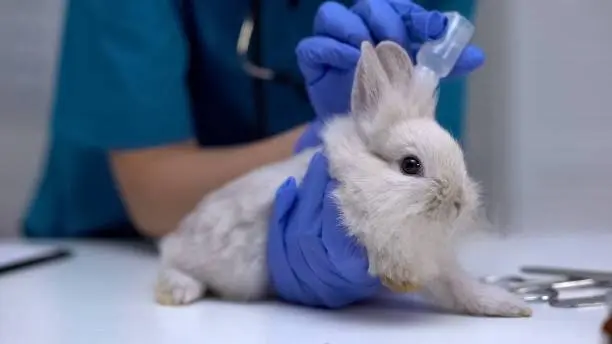
Evaluate your rabbit’s ear health with AI-driven clinical guidance. Understand ear mite infestation signs, monitor symptoms, and prepare data for your exotics veterinarian without replacing their expert care.
Ear mites (Psoroptes cuniculi) are highly contagious parasites that colonize the ear canal of rabbits. This infestation triggers intense pruritus, inflammation, and secondary bacterial or fungal infections if left untreated.
While alarming, ear mites are treatable with proper veterinary care. However, objective triage and early intervention are critical; delayed treatment can lead to otitis externa, head tilt, or neurological complications requiring urgent attention.
Ear mite infestations arise from various triggers and risk factors, listed from mild to severe.
Direct Contact Transmission
Spread through close contact with infested rabbits or contaminated bedding; highly contagious among rabbits.
Environmental Contamination
Mites survive in hay, bedding, and enclosures for several days, facilitating reinfestation.
Stress-Induced Susceptibility
Weakened immunity from stress, poor nutrition, or concurrent illness increases infestation risk.
Secondary Bacterial Infection
Scratching introduces bacteria, compounding the primary mite infestation with otitis externa.
Otitis Externa Complication
Chronic inflammation can progress to painful external ear infections that require systemic therapy.
Age-Related Vulnerability
Older or very young rabbits have higher susceptibility due to immature or declining immune status.
✦ This list represents common causes and contributing factors of rabbit ear mite infestation but does not constitute a complete diagnosis. Psoroptes cuniculi infestation requires veterinary-prescribed acaricidal treatment. Left untreated, ear mites can progress to otitis externa, aural hematomas, and vestibular disease. Persistent head tilt, nystagmus, or appetite loss indicates inner ear involvement requiring urgent care. Veterinary AI provides real-time clinical triage for rabbit ear mites, helping you assess severity and prepare for your veterinary consultation with clarity and confidence.
Non-invasive, medically safe measures to support your rabbit and monitor ear mite symptoms
Inspect Ears Daily
Gently examine both ears for debris, crusts, redness, or discharge using good lighting and a calm approach
Monitor Scratching Frequency
Track the number of scratching episodes per hour to assess symptom progression or improvement over time
Check Head Posture & Balance
Observe for head tilt, circling, or balance changes; these indicate inner ear involvement requiring urgent care
Maintain Appetite & Droppings Records
Log daily food and water intake; reduced consumption or abnormal droppings signals systemic illness
Isolate from Other Rabbits
House the affected rabbit separately to prevent cross-contamination until veterinary clearance is obtained
Do NOT Clean Ears at Home
Never insert cotton swabs or solutions into the ear canal; this risks tympanic membrane rupture and worsening
⚠ These guidelines are temporary supportive measures. Ear mite infestation requires veterinary-prescribed acaricidal treatment. Do not delay seeking care if head tilt worsens, balance issues develop, appetite decreases, or your rabbit shows signs of systemic illness. Ear mites can progress to serious inner ear complications without appropriate treatment.
TESTIMONIALS
Timely, clinically-grounded support for every stage of your rabbit's ear mite assessment
When your rabbit shows ear mite symptoms and you cannot determine whether this is a mild irritation or a condition progressing toward inner ear involvement requiring urgent care.
If your rabbit's head tilt worsens, nystagmus develops, or balance issues appear — these may indicate inner ear involvement or vestibular disease requiring immediate veterinary care.
When you need clinically grounded, exportable guidance to maximize the effectiveness of your upcoming veterinary visit; including a structured summary documenting symptom duration, severity, and progression.
💡 Always trust your instincts. If you are concerned about your rabbit's ear mites, Veterinary AI provides immediate, evidence-based assessment; but never delays seeking emergency care when a rabbit shows severe head tilt, nystagmus, loss of balance, appetite loss, or lethargy. Ear mites can progress to serious inner ear complications without appropriate veterinary treatment.
Ear mite infestations can progress to serious complications. These warning signs require prompt veterinary attention, supported by Veterinary AI's core tools.
Severe head tilt with circling behavior flags neurological risk; this may indicate inner ear involvement, vestibular disease, or central nervous system complications requiring immediate veterinary evaluation.
Complete appetite loss over 12 hours signals systemic compromise; Urgency Level Assessment prioritizes metabolic crisis and dehydration risk requiring emergency transport without delay.
Sudden loss of balance or falling requires organized data for your emergency vet; the report consolidates symptom timeline and progression for rapid clinical assessment.
Lethargy unresponsive to stimulation flags critical systemic deterioration; Instant Analysis recommends immediate emergency transport and alerts the veterinary team.
Seizure-like activity or tremors signals neurological involvement; Urgency Assessment escalates to critical status and recommends immediate emergency transport.
Visible bleeding or ulceration in the ear canal requires comprehensive documentation; the report captures clinical signs, progression timeline, and observations for the emergency veterinarian.
🚨 Any of these signs? Seek emergency care NOW.
Veterinary AI prepares a clinical summary for your emergency veterinarian while you prepare; but prompt emergency attention is essential if your rabbit shows severe head tilt, nystagmus (rapid eye flickering), loss of balance, seizures, appetite loss, lethargy, or visible ear bleeding. Ear mites can progress to life-threatening inner ear complications without appropriate treatment. Do not delay seeking care.
Flexible, cancel anytime
Best value for your pet
Just €7.58/month
Thanks for your interest in Veterinary AI. We'll notify you as soon as your AI consultation is ready. Check your email for confirmation.
More and more pet owners trust Veterinary AI for their pet's health. Get instant AI consultations, track medical records, set vaccine reminders, and access expert guidance — all from your phone. No waiting rooms, no appointments. Start now.
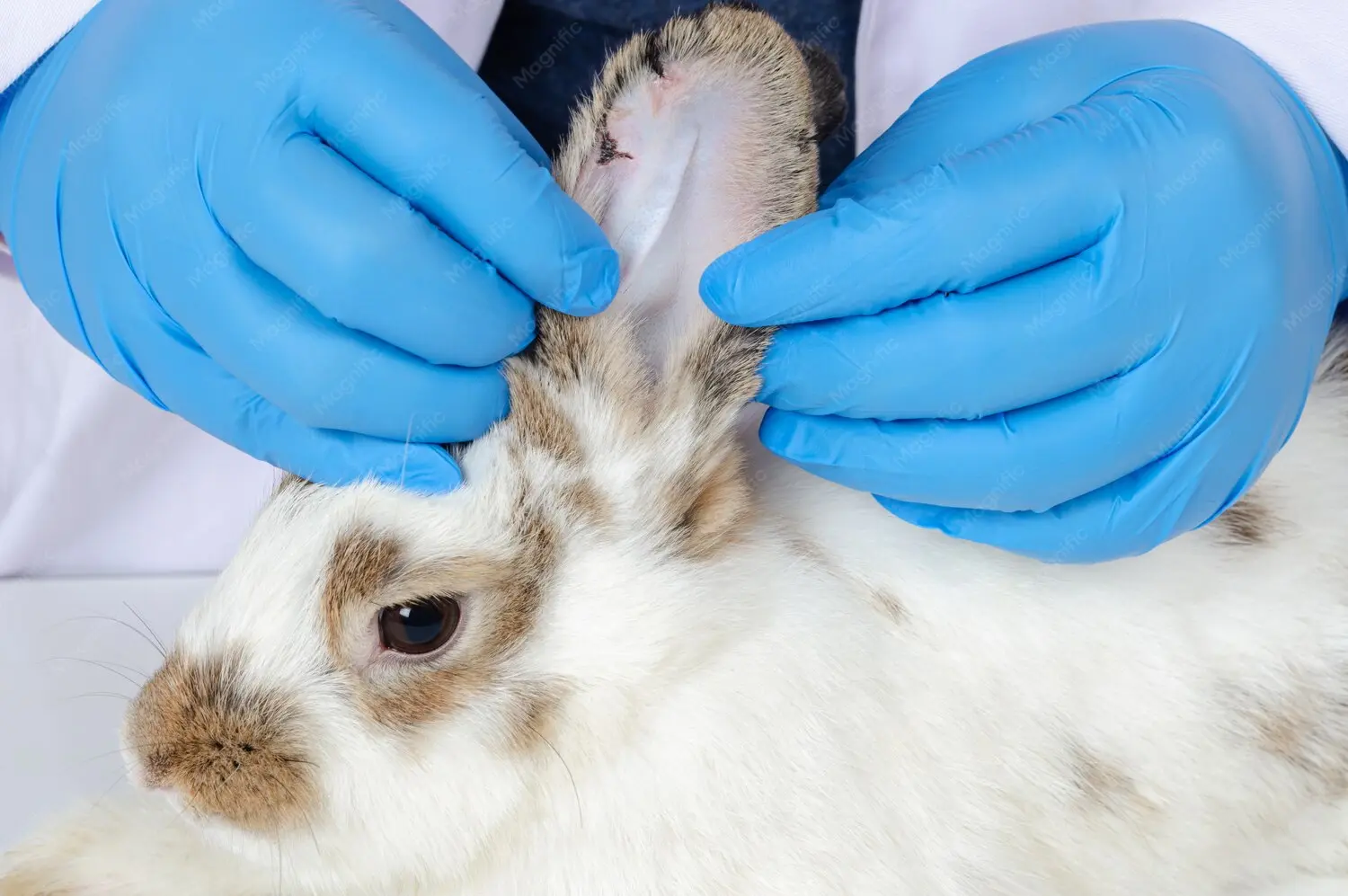
Everything you need to know about rabbit ear mites and how Veterinary AI can help. Can't find what you're looking for?
Start Ear Mite AssessmentPersistent head shaking, ear scratching, and dark, crusty debris inside the ear canal are the typical initial signs of Psoroptes cuniculi infestation.
Psoroptes cuniculi is species-specific; it does not infect humans, cats, or dogs but spreads rapidly between rabbits through direct contact.
Treatment involves prescription antiparasitic ear drops, cleaning, and sometimes anti-inflammatory medication for secondary inflammation. Follow-up may be required.
No. Over-the-counter products are often ineffective or unsafe. Veterinary diagnosis and prescription acaricidal treatment are essential for resolution.
Symptom improvement is typically seen within 3 to 5 days, but the full treatment course may last 2 to 3 weeks. Follow veterinary instructions carefully.