Canine Diarrhea: Clinical Triage & Decision Support

 A clinically-grounded assessment tool to help you understand the severity of your dog’s gastrointestinal signs and determine the appropriate timing for veterinary intervention.

VETERINARY AI FOR PET OWNERS

Understanding Acute Gastrointestinal Disturbance in Dogs

Diarrhea represents an acceleration of intestinal transit or a disruption in fluid absorption within the colon and small intestine. This physiological response often indicates an underlying trigger, ranging from dietary indiscretion to pathogenic colonization, requiring structured observation rather than assumption.

Your concern is valid, yet panic serves no clinical purpose. What matters now is objective triage. By assessing stool consistency, frequency, and systemic signs such as energy level and gum color, you gather the exact data points a veterinarian needs to prioritize care.

Veterinary AI

Try it with your own pet

Common Causes of Canine Diarrhea

Six clinical triggers, ordered from mild to medically significant.

Dietary Indiscretion

Ingestion of spoiled food, garbage, or non-food items causing transient mucosal irritation

🔍 What to watch: Sudden onset, often within 2-6 hours of scavenging. Stool may contain visible debris or foreign material.

✅ Typical resolution: Self-limiting within 24-48 hours with gastrointestinal rest and bland diet reintroduction.

Click to learn more

Abrupt Diet Change

Switching proteins or brands without a 7-day transition disrupts the gut microbiome

🔍 What to watch: Loose stool beginning 12-48 hours after the new food introduction. Microbiome shift takes 3-7 days to stabilize.

✅ Typical resolution: Gradual transition over 7 days resolves most cases. Probiotic supplementation supports microbial balance.

Click to learn more

Food Intolerance

An adverse reaction to specific proteins, grains, or additives without an immune-mediated mechanism

🔍 What to watch: Recurrent loose stool linked to a specific ingredient. Unlike allergy, no skin signs or immune response are present.

✅ Typical resolution: Elimination diet trial over 8-12 weeks identifies the trigger. Novel protein or hydrolyzed diets are first-line management.

Click to learn more

Intestinal Parasitism

Giardia, roundworms, or coccidia colonizing the tract, often requiring microscopic fecal analysis

🔍 What to watch: Intermittent or persistent diarrhea, often with mucus, weight loss, or a dull coat. Fecal flotation test is diagnostic gold standard.

✅ Typical resolution: Targeted antiparasitic medication based on fecal analysis. Environmental decontamination prevents reinfection.

Click to learn more

Bacterial or Viral Enteritis

Pathogenic overload or viral infection causing acute inflammation and impaired absorption

🔍 What to watch: Watery, profuse diarrhea often accompanied by fever, vomiting, and marked lethargy. Hemorrhagic forms carry higher risk.

✅ Typical resolution: Supportive care with fluid therapy and antiemetics. Bacterial cases may require targeted antibiotics based on culture.

Click to learn more

Chronic Organ Dysfunction

Exocrine pancreatic insufficiency, liver disease, or renal compromise manifesting as persistent loose stool

🔍 What to watch: Chronic, progressive diarrhea often with steatorrhea, weight loss despite normal appetite. Blood work and organ-specific testing are essential.

✅ Typical resolution: Lifelong management with enzyme replacement for EPI, or dietary and pharmacological support for hepatic and renal conditions.

Click to learn more

If your dog has diarrhea and you’re uncertain about the severity, take informed action. Veterinary AI delivers real-time clinical triage tailored to your pet’s specific presentation—helping you distinguish between a self-limiting dietary upset and signs requiring urgent care with clarity and confidence.
+0
Symptoms analyzed
by pet owners worldwide
+0
Pet owners trusting
AI for their pet's health
0/7
Available anytime
even at 2AM emergencies

Safe Home Care & Monitoring Guidelines

Clinically safe, non-invasive steps to implement immediately when your dog has diarrhea.

Assess Hydration Status Hourly: Gently lift the skin between the shoulder blades. If it fails to snap back promptly, fluid deficit is significant
Implement a 12-Hour Gastrointestinal Rest: Withhold food completely to reduce osmotic load and allow epithelial repair. This does not apply to water
Provide Small, Frequent Water Access: Offer ice cubes or small amounts of water every 30 minutes to prevent triggering a gastrolactic reflex
Record Stool Consistency Objectively: Use a fecal scoring chart (1-7 scale). Note color, mucus presence, and frequency for clinical history
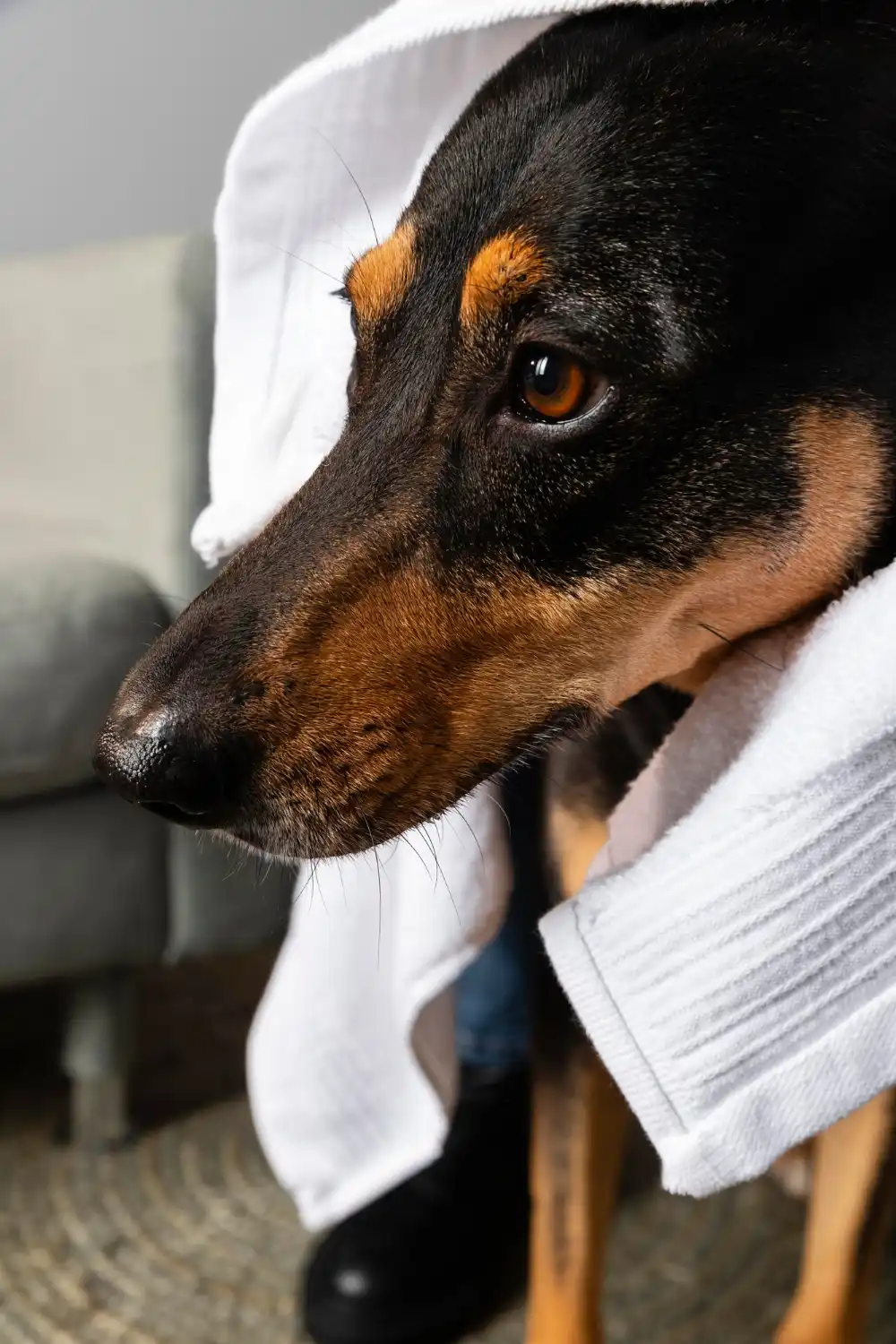
Dog with diarrhea - clinical assessment and home care guide

TESTIMONIALS

OPYNIO Reviews Dog Diarrhea

When Can Veterinary AI Help You and Your Dog?

Unsure About Severity?

When your dog has diarrhea and you're unsure of the severity, Veterinary AI provides structured, evidence-based triage criteria to distinguish self-limiting dietary upset from patterns requiring professional intervention.

Persistent or Worsening?

If loose stool persists beyond 24 hours or your dog shows accompanying signs such as vomiting, anorexia, or marked lethargy, Veterinary AI helps you compile a timeline and severity score for your veterinarian.

Pre-Visit Preparation?

When you need clinically-grounded guidance to manage the next 6-12 hours at home safely while preparing the exact history details your vet requires for an efficient, informed consultation.

When to Seek Immediate Emergency Care

Dog with diarrhea - clinical emergency assessment guide

Red flags that require urgent veterinary attention, and how Veterinary AI supports each critical decision when your dog has diarrhea.

Hematochezia or Melena Detected: Fresh red blood or black, tarry stool. Use the Instant Symptom Analysis & Risk Scoring to flag hemorrhagic gastroenteritis probability immediately
Profound Weakness or Collapse: Indicative of hypovolemic shock. The Instant Symptom Analysis & Risk Scoring tool calculates the urgency based on perfusion parameters you report
Unproductive Vomiting with Diarrhea: A classic bloat or obstruction risk in deep-chested breeds. 24/7 Smart Triage & Urgency Level Assessment guides you on positional safety during transport
Suspected Toxin Ingestion: Diarrhea combined with neurological signs like tremors. Use 24/7 Smart Triage & Urgency Level Assessment to determine if inducing emesis is contraindicated

Monthly

Flexible, cancel anytime

€9.99 /month
AI symptom assessment
Emergency guidance 24/7
Preventive care reminders
Wellness monitoring
Breed-specific health tips
Unlimited conversations
Start monthly plan
SAVE 24%

Annual

Best value for your pet

€90.99 /year

Just €7.58/month

AI symptom assessment
Emergency guidance 24/7
Preventive care reminders
Wellness monitoring
Breed-specific health tips
Unlimited conversations
Priority support
Start annual plan

Veterinary AI is an educational triage tool grounded in clinical data, designed to help pet owners assess symptom severity. It does not diagnose, establish a VCPR, prescribe, or replace an in-person veterinary examination. If your pet shows distress, severe pain, or rapid deterioration, seek emergency care immediately.

By submitting you agree to our Privacy Policy

Veterinary AI

AI-Powered Pet Care 24/7

More and more pet owners trust Veterinary AI for their pet's health. Get instant AI consultations, track medical records, set vaccine reminders, and access expert guidance — all from your phone. No waiting rooms, no appointments. Start now.

FAQ

Frequently Asked
Questions

Everything you need to know about canine diarrhea and how Veterinary AI can help. Can't find what you're looking for?

Contact Us

What should I feed my dog after a diarrhea episode?

After a 12-24 hour fast, offer a bland diet of boiled white rice and plain, lean protein like skinless chicken in small, frequent portions for 2-3 days.

When is dog diarrhea considered an emergency?

It is an emergency if there is profuse bloody stool, uncontrollable vomiting, abdominal distension, collapse, or pale white gums indicating severe blood loss or shock.

Can stress cause diarrhea in dogs?

Yes, norepinephrine release accelerates colonic motility. Stress colitis often produces small volumes of jelly-like, mucoid stool, typically resolving with environmental management.

How does Veterinary AI assess my dog's diarrhea severity?

It analyzes structured data you provide — stool consistency, frequency, systemic signs — against clinical benchmarks to generate an objective risk score and clear triage recommendation.

What does the color of dog diarrhea indicate?

Yellow suggests rapid transit; green may indicate bile or grass ingestion; black, tarry stool signals digested blood; and red streaks point to lower intestinal or colonic bleeding.