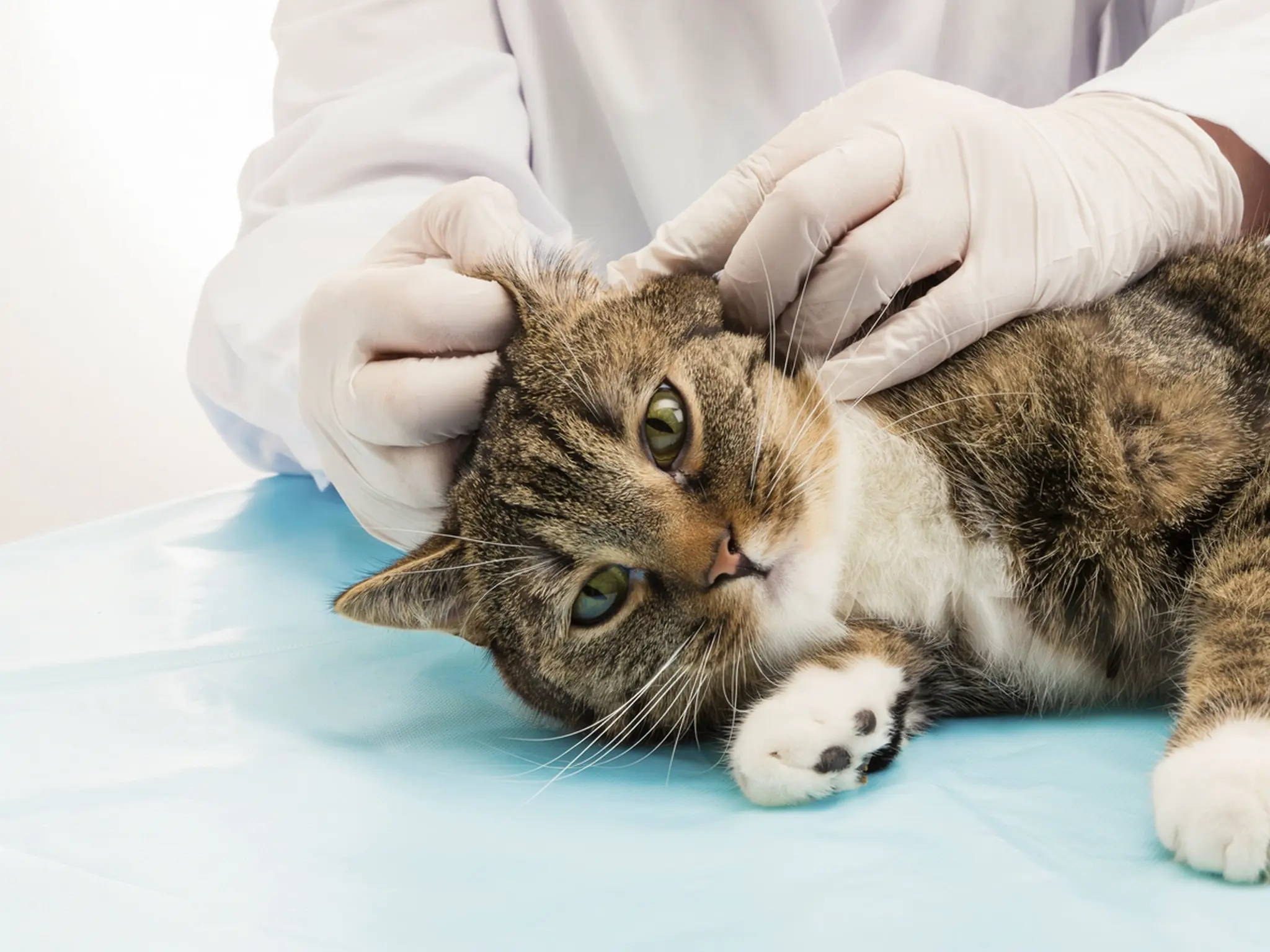
Get instant, evidence-based guidance to assess your cat’s ear symptoms. Veterinary AI helps you determine urgency and prepare for your in-person veterinary visit without replacing professional care.
Ear mites (Otodectes cynotis) are highly contagious parasites that colonize the ear canal, triggering intense pruritus, inflammation, and secondary infections. Left untreated, they can progress to aural hematomas or chronic otitis externa.
While ear mites are rarely life-threatening, the accompanying scratching and head shaking can cause self-inflicted trauma. Objective triage helps you distinguish between routine infestation and complications requiring urgent veterinary intervention.
Ear mite infestations arise from several interrelated factors, listed from mild to severe.
Direct Contact Transmission
Spreads through close contact with infested cats, dogs, or ferrets; highly contagious among felines.
Environmental Exposure
Mites survive briefly in bedding, carpets, and grooming tools; reinfestation from environment is possible.
Outdoor Lifestyle
Roaming cats encounter infested strays or contaminated outdoor environments; higher exposure risk.
Weakened Immune System
Young kittens, elderly cats, or immunocompromised felines show higher susceptibility and persistence.
Poor Grooming Habits
Cats that cannot self-clean effectively may develop persistent infestations with heavier mite burdens.
Chronic Reinfestation
Incomplete treatment or untreated household pets allows mites to return; all in-contact animals require treatment.
✦ This list represents common predisposing factors for Otodectes cynotis infestation but does not constitute a complete diagnosis. Persistent scratching, head shaking, or dark ear debris warrants veterinary evaluation, including otoscopic examination and microscopic analysis to confirm mites and rule out secondary infections. Ear mites are highly contagious to other cats and dogs. Do not insert cotton swabs or any objects into the ear canal. Veterinary AI provides real-time clinical triage tailored to feline ear symptoms, helping you distinguish between mild infestations and complications requiring prompt veterinary attention with clarity and confidence.
Non-invasive, medically safe measures to support your cat and monitor for ear mite symptoms
Monitor Scratching & Head Shaking
Track frequency of scratching and head shaking; note any increase in intensity or new signs like pain or balance issues
Inspect Ears Daily
Gently examine the outer ear and pinna for redness, swelling, or increased dark debris; use good lighting and never insert anything into the canal
Maintain Environmental Cleanliness
Wash bedding and vacuum frequently to reduce environmental mite loads; mites can survive briefly in the environment
Isolate Infested Pets
Separate affected cats from healthy ones to prevent cross-contamination until treatment begins for all in-contact animals
Avoid Cotton Swabs and Foreign Objects
Never insert Q-tips, cotton swabs, or any objects into the ear canal; this can push debris deeper and cause trauma to the tympanic membrane
Monitor Appetite and Behavior
Document any changes in eating, drinking, activity level, or signs of pain to share with your veterinarian
⚠ These guidelines are supportive measures only. Ear mites are highly contagious to other cats and dogs. Do not apply over-the-counter ear drops or remedies without veterinary guidance; many products are not approved for cats and can cause ototoxicity. Any cat with painful ears, swollen ear flaps, balance loss, head tilt, or signs of systemic illness requires immediate veterinary assessment.
TESTIMONIALS
Timely, clinically-grounded support for every stage of your cat's ear mite assessment
When your cat shows ear mite symptoms (scratching, head shaking, dark debris in ears) and you cannot determine whether it signals a mild infestation or one that requires prompt treatment to prevent complications and transmission to other pets.
If your cat's scratching or head shaking intensifies, or if you notice swollen ear flaps, odor, painful ears, balance loss, head tilt, or circling; these may indicate complications requiring urgent veterinary care.
When you need clinically grounded, exportable guidance to maximize the effectiveness of your upcoming veterinary consultation; including a structured clinical summary documenting scratching frequency, ear debris characteristics, and other observations.
💡 Always trust your instincts. If you are concerned about your cat's ear mites, Veterinary AI provides immediate, evidence-based assessment; but never delays seeking care when your cat shows painful ears, swollen ear flaps, balance loss, head tilt, circling, or signs of systemic illness. Ear mites are highly contagious to other cats and dogs. Do not insert cotton swabs or any objects into the ear canal.
While ear mites are rarely life-threatening, these warning signs require prompt veterinary attention, supported by Veterinary AI's core tools when your cat shows ear mite symptoms and related signs.
A swollen or drooping ear flap (aural hematoma) is flagged as high concern; this may result from vigorous scratching and requires prompt surgical or medical management.
Intense scratching leading to open wounds or excoriation around the ear triggers an alert; this may indicate self-trauma requiring intervention to prevent deep infection.
Balance loss, head tilt, or circling signals a complication; these may indicate middle or inner ear involvement, vestibular disease, or tympanic membrane rupture requiring urgent evaluation.
Facial drooping, difficulty eating, or ocular discharge alongside ear symptoms suggests neurological or severe infectious involvement requiring immediate veterinary assessment.
Systemic signs (vomiting, fever, lethargy, decreased appetite) requires organized data for your vet; our report consolidates symptom chronology, ear debris characteristics, and clinical history for rapid evaluation.
Purulent discharge with foul odor (suggesting tympanic membrane rupture or severe otitis) requires comprehensive data; our summary documents all observations to help your veterinarian expedite care.
Any of these signs? Seek prompt care.
Veterinary AI prepares a clinical summary for your veterinarian while you prepare, but prompt veterinary attention is essential for balance loss, head tilt, aural hematomas, or signs of systemic illness. Ear mites are highly contagious to other cats and dogs. Do not insert cotton swabs or any objects into the ear canal.
Flexible, cancel anytime
Best value for your pet
Just €7.58/month
Thanks for your interest in Veterinary AI. We'll notify you as soon as your AI consultation is ready. Check your email for confirmation.
More and more pet owners trust Veterinary AI for their pet's health. Get instant AI consultations, track medical records, set vaccine reminders, and access expert guidance — all from your phone. No waiting rooms, no appointments. Start now.
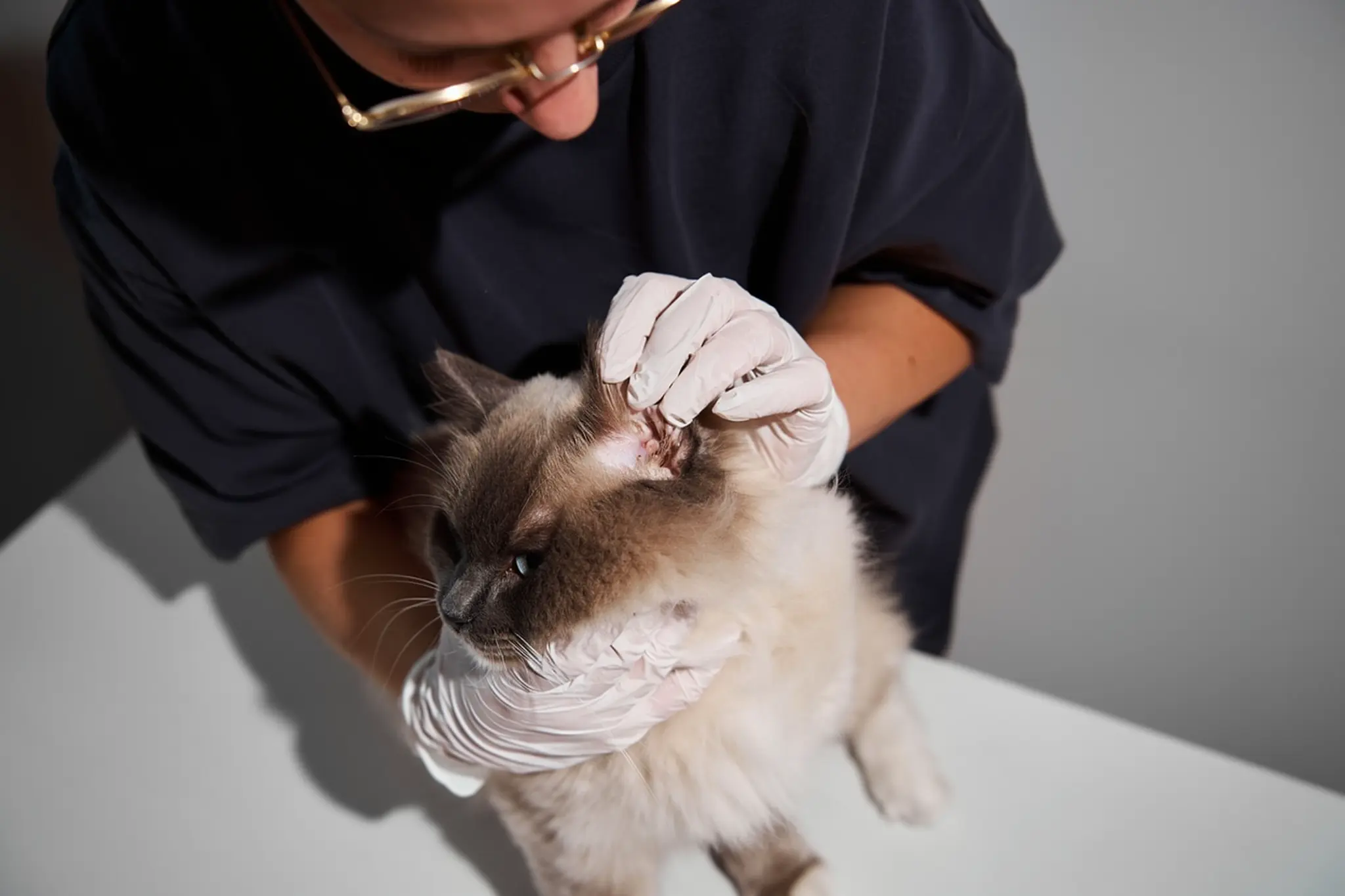
Everything you need to know about cat ear mites and how Veterinary AI can help. Can't find what you're looking for?
Start Ear Mite Symptom AssessmentSigns include intense ear scratching, head shaking, dark crumbly debris resembling coffee grounds, redness, and sometimes a foul odor. Scratching may lead to self-trauma or aural hematomas.
Ear mites (Otodectes cynotis) can cause temporary mild skin irritation in humans but do not establish a long-term infestation. Transmission to humans is rare and self-limiting.
Diagnosis is made via otoscopic examination (visualizing mites) and microscopic examination of ear swab material to identify Otodectes cynotis mites, eggs, or feces.
Ear mites are rarely life-threatening but cause significant discomfort. Untreated, they can lead to secondary infections, aural hematomas, and chronic otitis. They are highly contagious to other pets.
Yes, ear mites are curable with prescription topical or systemic parasiticides. Treatment typically resolves the infestation within 7 to 14 days. All in-contact pets require treatment.