Understand your cat’s dermatologic signs with AI-assisted clinical reasoning. Get objective, evidence-based triage guidance to help you assess urgency and prepare meaningfully for your in-person veterinary consultation.
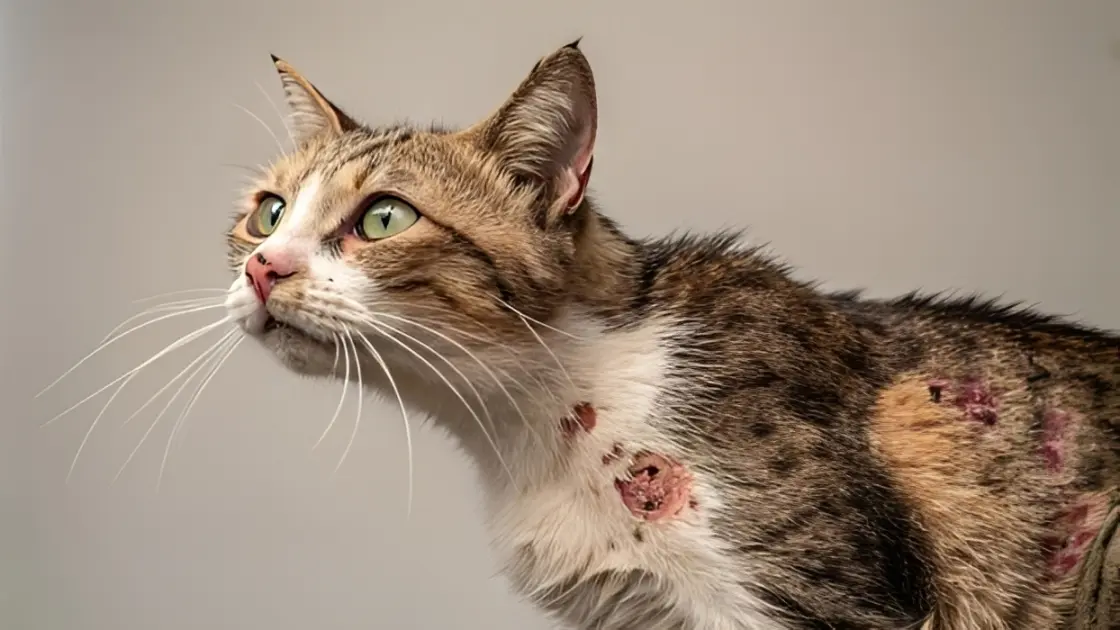
Feline ringworm (dermatophytosis) is a highly contagious fungal infection caused primarily by Microsporum canis, affecting the skin, hair, and claws. Clinical manifestations (circular alopecia, scaling, crusting, and pruritus) reflect the fungal invasion of keratinized tissues; early recognition prevents widespread transmission to other pets and humans.
While ringworm is contagious and requires treatment, it is generally not life-threatening and responds well to appropriate antifungal therapy. Objective, systematic triage empowers you to distinguish between ringworm and other skin conditions (allergies, bacterial infections, parasites). Veterinary AI provides structured guidance that supports, not replaces, your veterinarian’s diagnostic expertise.
Feline dermatophytosis symptoms originate from multiple clinical pathways, listed from mild to severe.
Fungal Infection (Microsporum canis)
Most common cause; highly contagious fungal infection affecting hair, skin, and claws; zoonotic.
Bacterial Skin Infections (Pyoderma)
Secondary bacterial infections can mimic ringworm with crusting, alopecia, and purulent discharge.
Allergic Skin Disease
Flea allergy dermatitis, food allergies, or environmental allergies can cause hair loss, scaling, and pruritus.
Parasitic Infestations
Mites (Demodex, Notoedres) or fleas can cause alopecia, scaling, crusting, and severe pruritus.
Autoimmune Skin Disorders
Pemphigus, lupus, or other immune-mediated diseases can cause crusting, ulceration, and hair loss resembling ringworm.
Psychogenic Alopecia
Excessive grooming from stress, anxiety, or behavioral issues can cause hair loss without underlying infection.
✦ This list represents common differentials but does not constitute a complete diagnosis. Persistent skin lesions, circular alopecia, scaling, or crusting warrant veterinary evaluation to rule out fungal, bacterial, parasitic, and immune-mediated pathology. Ringworm is contagious to other pets and humans. Do not apply over-the-counter antifungal medications without veterinary guidance. Veterinary AI provides real-time clinical triage tailored to feline-specific dermatophyte risks, helping you distinguish between manageable concerns and conditions requiring prompt veterinary attention with clarity and confidence.
Non-invasive, medically safe measures to support your cat and monitor for ringworm and skin changes
Skin Lesion Monitoring
Document size, shape, and number of lesions; note any spread to other body areas or changes in appearance
Environmental Cleaning and Hygiene
Vacuum frequently; wash bedding, toys, and food bowls in hot water; fungal spores can persist in the environment
Hand Hygiene and Personal Protection
Wash hands thoroughly after handling your cat; consider wearing gloves when touching affected areas; ringworm is zoonotic
Prevent Contamination Spread
Avoid sharing grooming tools, bedding, or food bowls with other pets; isolate affected cat if possible to prevent transmission
Pruritus and Self-Trauma Monitoring
Observe for scratching, biting, or rubbing; note any worsening or development of secondary skin infection
Clinical Summary Preparation
Document lesion characteristics, progression, itching, and any other observations for your veterinarian
⚠ These guidelines are supportive measures only. Ringworm is contagious to other pets and humans. Wash hands thoroughly after handling. Do not apply over-the-counter antifungal medications without veterinary guidance. Any cat with widespread lesions, severe itching, or signs of secondary infection requires veterinary assessment.
TESTIMONIALS
Timely, clinically-grounded support for every stage of your cat's ringworm assessment
When your cat shows ringworm symptoms (circular hair loss, scaling, crusting) and you cannot determine whether it signals a mild fungal infection or requires prompt treatment to prevent transmission to other pets and humans.
If your cat's lesions spread to other body areas, or if your cat develops widespread lesions, severe itching, or signs of secondary skin infection (purulent discharge, odor, heat); these may indicate progressive infection requiring prompt treatment.
When you need clinically grounded, exportable guidance to maximize the effectiveness of your upcoming veterinary consultation; including a structured clinical summary documenting lesion characteristics, progression, pruritus, and any other observations.
💡 Always trust your instincts. If you are concerned about your cat's ringworm, Veterinary AI provides immediate, evidence-based assessment; but never delays seeking care when your cat shows widespread lesions, severe itching, or signs of secondary infection. Ringworm is contagious to other pets and humans. Wash hands thoroughly after handling.
While ringworm is rarely an emergency, these warning signs require prompt veterinary attention, supported by Veterinary AI's core tools when your cat shows ringworm symptoms and related signs.
Widespread lesions affecting the entire body is flagged as concerning; this may indicate severe fungal infection or underlying immunosuppression requiring prompt treatment.
Severe itching or self-trauma (excoriation) triggers an alert; this may indicate intense pruritus requiring intervention to prevent secondary infection and skin damage.
Signs of secondary bacterial infection (purulent discharge, foul odor, heat, swelling) signals a complication requiring urgent veterinary attention.
Lesions affecting the eyes, nose, or mouth requires urgent assessment; these areas are sensitive and complications can arise.
Systemic signs (lethargy, fever, decreased appetite) requires organized data for your vet; our report consolidates lesion characteristics, progression, and clinical history for rapid evaluation.
Lesions in immunocompromised individuals (children, elderly, pregnant women) require comprehensive data; our summary documents transmission risk and clinical history to help your veterinarian expedite care.
Any of these signs? Seek prompt care.
Veterinary AI prepares a clinical summary for your veterinarian while you prepare, but prompt veterinary attention is essential for widespread lesions, severe itching, signs of secondary infection, or lesions in sensitive areas. Ringworm is contagious to other pets and humans.
Flexible, cancel anytime
Best value for your pet
Just €7.58/month
Thanks for your interest in Veterinary AI. We'll notify you as soon as your AI consultation is ready. Check your email for confirmation.
More and more pet owners trust Veterinary AI for their pet's health. Get instant AI consultations, track medical records, set vaccine reminders, and access expert guidance — all from your phone. No waiting rooms, no appointments. Start now.
Everything you need to know about cat ringworm symptoms and how Veterinary AI can help. Can't find what you're looking for?
Start Ringworm Symptom AssessmentSigns include circular patches of hair loss (alopecia), scaling, crusting, redness, and broken hairs. Lesions often appear on the head, ears, and paws. Pruritus is variable.
Yes, ringworm is zoonotic and can be transmitted from cats to humans. Children, elderly, pregnant women, and immunocompromised individuals are at higher risk.
Diagnosis typically involves Wood's lamp examination (fluoresces in about 50% of Microsporum canis cases), microscopic hair examination, fungal culture (DTM), or PCR testing.
Ringworm is not life-threatening but is highly contagious and requires treatment to prevent spread to other pets and humans. Early diagnosis and treatment are important.
Yes, ringworm is curable with appropriate antifungal therapy (topical and/or systemic). Treatment usually takes several weeks to months and requires environmental decontamination.