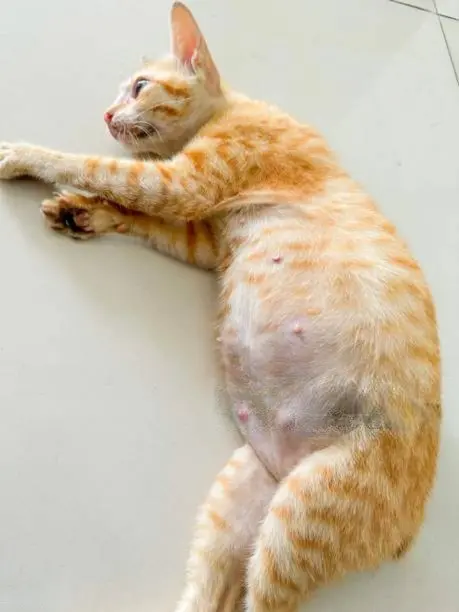
Understand the severity of your cat’s abdominal distension through AI-powered triage guidance, designed to support your decision-making before and during your veterinary visit.
Abdominal distension in cats can indicate fluid accumulation (ascites), organ enlargement, intestinal gas, pregnancy, or mass lesions. The onset speed and associated signs provide critical diagnostic clues; acute swelling suggests obstruction or torsion, while gradual enlargement may indicate organ disease or neoplasia.
Your concern is valid; a swollen belly can compromise breathing and indicate serious underlying pathology. Do not panic; some causes are manageable with prompt care. However, objective triage and timely evaluation are critical, as conditions like pyometra, heart failure, or intestinal obstruction can be life-threatening.
Abdominal distension in cats originates from various conditions, ranging from mild to life-threatening.
Gradual, symmetrical abdominal enlargement; often accompanied by overall weight gain and reduced activity.
Progressive, bilateral abdominal enlargement over 63-68 days; visible nipples may become prominent.
Progressive distension in intact females; often with increased thirst, lethargy, and vaginal discharge.
Symmetrical, shifting distension; often from liver disease, heart failure, or cancer.
Firm, often painful abdominal distension; vomiting, anorexia, and reduced fecal output.
Gradual, asymmetrical or generalized distension; may be firm or irregular on palpation.
This list is for educational purposes only. Only a veterinarian can provide an accurate diagnosis through physical examination and diagnostic testing.
Follow these non-invasive steps to monitor your cat safely while awaiting veterinary guidance.
Gentle Observation
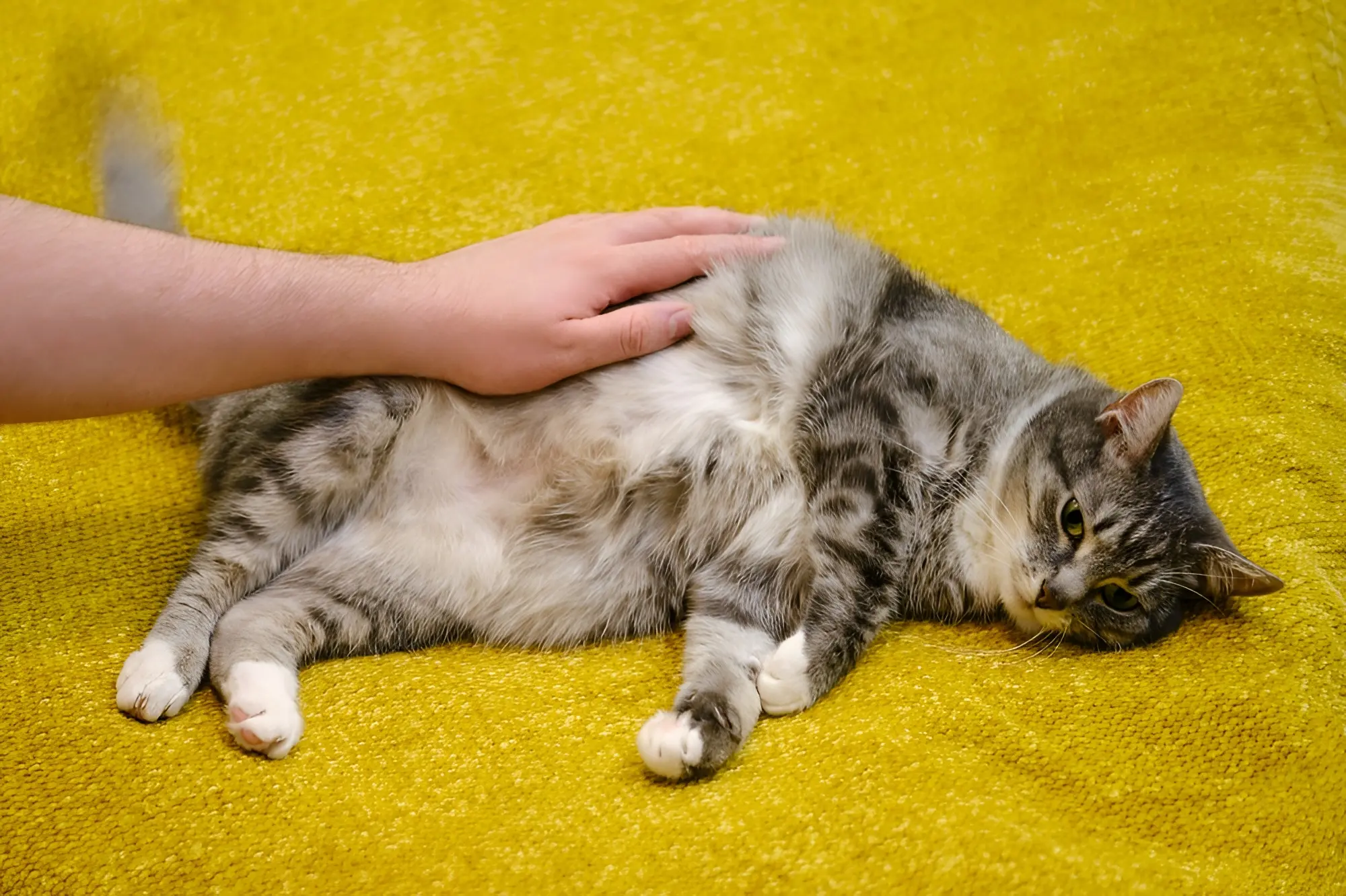
Visually inspect the abdomen; never apply deep pressure or forceful palpation
Monitor Breathing Effort
Count respiratory rate (normal: 20-30 breaths/min); labored breathing is an emergency
Track Appetite & Thirst
Record daily food and water intake; increased thirst may indicate infection or organ disease
Measure Abdominal Girth
Use a soft measuring tape weekly around the largest part of the abdomen; document changes
Monitor Litter Box Usage
Track urination and defecation frequency; note straining or reduced output
Check Gum Color
Lift lip to check gum color (normal: pink); pale, blue, or yellow gums indicate emergency
✦ Home care does not replace veterinary diagnosis. Contact your veterinarian if the belly continues to enlarge, your cat shows difficulty breathing, pain, vomiting, or lethargy. Veterinary AI provides real-time guidance to help you monitor and document your cat's condition effectively.
TESTIMONIALS
Timely, clinically-grounded support for every stage of your cat's abdominal distension assessment
When your cat has abdominal distension and you cannot determine whether it is weight gain, pregnancy, or a condition requiring urgent care.
If the distension progresses over days, or your cat shows increased thirst, lethargy, vomiting, or reproductive signs (intact females); these may indicate infection or organ disease.
When you need clinically-grounded guidance to prepare questions and documentation (distension timeline, associated signs) for your veterinary consultation.
💡 Always trust your instincts. If you're concerned about your cat's swollen belly, Veterinary AI provides immediate, evidence-based assessment; but never delays seeking emergency care when your cat shows difficulty breathing, a painful abdomen, vomiting, or systemic signs.
Red flags that require urgent veterinary attention; and how Veterinary AI supports each critical decision when your cat shows concerning abdominal distension.
Difficulty Breathing
Instant Symptom Analysis flags diaphragm compromise; immediate emergency evaluation required
Painful Abdomen
Risk Scoring prioritizes peritonitis or torsion; immediate veterinary care required
Non-Productive Retching or Vomiting
24/7 Smart Triage detects possible gastric dilation or obstruction; escalate to ER immediately
Pale, Blue, or Yellow Gums
Urgency Assessment identifies systemic compromise; immediate vet visit recommended
Sudden, Rapid-Onset Distension
Exportable Report documents timeline and severity for immediate emergency vet review
Inability to Urinate or Defecate
Exportable Report captures obstruction risk for your emergency veterinarian; go immediately
🚨 These signs require immediate in-person emergency veterinary care. Veterinary AI is not a substitute for emergency medical attention. If your cat shows any of these red flags alongside a swollen belly, do not delay; seek emergency care immediately.
Flexible, cancel anytime
Best value for your pet
Just €7.58/month
Thanks for your interest in Veterinary AI. We'll notify you as soon as your AI consultation is ready. Check your email for confirmation.
More and more pet owners trust Veterinary AI for their pet's health. Get instant AI consultations, track medical records, set vaccine reminders, and access expert guidance — all from your phone. No waiting rooms, no appointments. Start now.
Everything you need to know about abdominal swelling in cats, and how Veterinary AI can help. Can't find what you're looking for?
Start Symptom AssessmentSudden swelling can result from intestinal obstruction, gastric dilation, trauma, or internal bleeding; immediate veterinary evaluation is required.
Severe intestinal parasite infestations can cause a pot-bellied appearance, especially in kittens. However, many other causes are more common in adult cats.
Yes. Pyometra (uterine infection) causes abdominal distension in intact females and is a life-threatening emergency requiring immediate veterinary care.
Yes. Severe constipation or megacolon can cause significant abdominal distension and discomfort. Veterinary evaluation and management are needed.
Diagnosis may include physical exam, X-rays, ultrasound, bloodwork, urinalysis, and fluid analysis (abdominocentesis) as indicated.